Medically reviewed sources: Centers for Disease Control and Prevention (CDC), American Heart Association (AHA) 2026 Statistical Update, Journal of the American College of Cardiology (JACC). Last updated: July 2026.
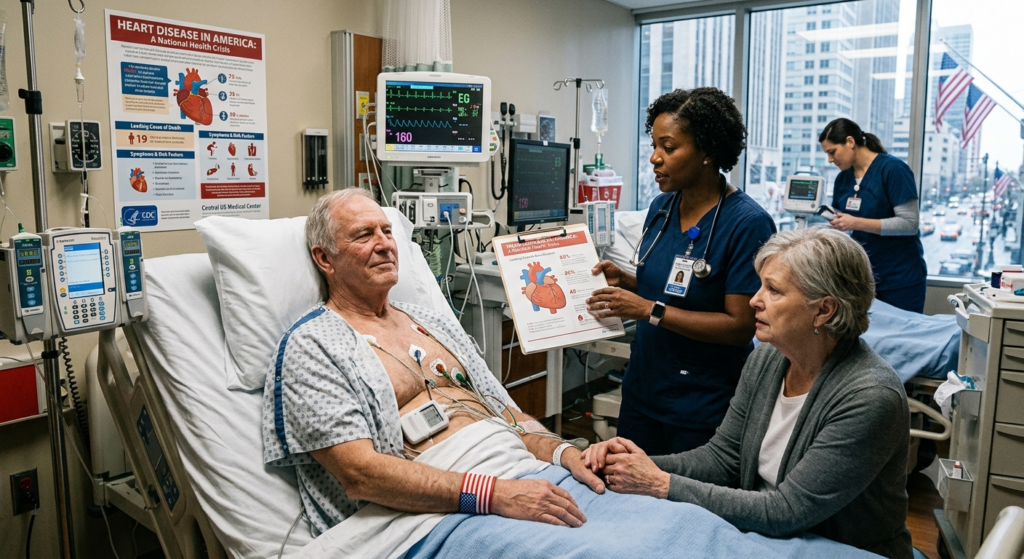
Think about your own family for a second. A grandfather who “had a bad heart.” An aunt on blood pressure pills since her 40s. A coworker who casually mentions his cholesterol numbers like they’re the weather. If any of that sounds familiar, you’re not imagining a pattern — you’re living inside one of the most consistent facts about American health.
Heart disease has been the leading cause of death in the United States since 1950, and it still is today. It doesn’t discriminate by income, zip code, or how “healthy” someone looks on the outside. According to the American Heart Association’s 2026 Statistical Update, cardiovascular disease claimed 915,973 American lives in 2023 — more than cancer and accidents combined, the second and third leading causes of death.
But here’s the part that rarely gets enough attention: heart disease is also one of the most preventable major illnesses we know how to fight. This guide breaks down exactly what to watch for, why it happens, and what genuinely moves the needle — written the way you’d want a knowledgeable friend to explain it, not a textbook.
Does This Sound Like You? A Quick Gut-Check
Before the statistics and science, a few honest questions worth sitting with:
- Do you get winded walking up a flight of stairs you used to handle easily?
- Has a doctor ever mentioned your blood pressure or cholesterol “creeping up,” and you meant to follow up but never did?
- Do you have a parent or sibling who had a heart attack or stroke before age 55?
- Is your day mostly sitting — desk, car, couch — with movement squeezed in only when you remember?
- Do you tell yourself you’ll “deal with it later” because nothing hurts right now?
If you nodded along to even one of these, this article was written for you. Heart disease rarely announces itself early. It builds quietly, in the background of ordinary days, which is exactly why awareness — the kind you’re building right now by reading this — is one of the most powerful tools available.
How Common Is This, Really?
The numbers are worth sitting with, not to scare you, but to reframe heart disease as something that touches nearly everyone’s circle, not a distant risk:
- Heart disease is the leading cause of death for men, women, and most racial and ethnic groups in the U.S.
- Roughly 1 in 20 adults age 20+ has coronary artery disease, the most common form of heart disease.
- Someone in the U.S. has a heart attack every 40 seconds.
- About 47% of U.S. adults — nearly half — have high blood pressure, one of the biggest hidden drivers of heart disease.
- Roughly half of all U.S. adults live with some form of cardiovascular disease, including high blood pressure, coronary disease, or heart failure.
- More than 20 million American adults have coronary heart disease, which causes over 349,000 deaths every year.
There is real, hard-won good news buried in here too: total cardiovascular deaths declined from 941,652 in 2022 to 915,973 in 2023, continuing a slow recovery after a pandemic-era spike. That decline didn’t happen by accident — it reflects millions of individual decisions to quit smoking, get blood pressure under control, and catch problems earlier.
What “Heart Disease” Actually Means
It’s easy to picture heart disease as one single thing, but it’s really a family of related conditions:
- Coronary artery disease (CAD) — plaque buildup narrows the arteries feeding the heart; the most common cause of heart attacks.
- Heart failure — the heart still beats, but it can’t pump blood efficiently enough for the body’s needs.
- Arrhythmias — irregular electrical signaling causes the heart to beat too fast, too slow, or unevenly; atrial fibrillation (AFib) is the most common serious type and raises stroke risk significantly.
- Heart valve disease — one or more valves don’t open or close properly, forcing the heart to work harder than it should.
- Congenital heart defects — structural issues present at birth, some undetected until adulthood.
Knowing which type concerns you changes everything about which symptoms to watch for and which prevention steps matter most.
The Symptoms Everyone Should Actually Know
Classic Heart Attack Warning Signs
- Chest pain, pressure, squeezing, or fullness lasting more than a few minutes, or that comes and goes
- Discomfort spreading to the arms, back, neck, jaw, or upper stomach
- Shortness of breath, with or without chest discomfort
- Breaking into a cold sweat for no clear reason
- Nausea or lightheadedness
- Unusual fatigue that sometimes shows up days before the event
Why Women’s Symptoms Deserve Their Own Spotlight
Women are more likely than men to have a heart attack without the “classic” crushing chest pain. Instead, the warning signs often look like:
- Shortness of breath
- Extreme or unexplained fatigue, sometimes for days beforehand
- Nausea or vomiting
- Back or jaw pain
- Lightheadedness or dizziness
This difference is a major reason women’s heart attacks get missed or diagnosed later than men’s — and it’s part of why data consistently shows women face higher mortality after a heart attack than men do.
The Quiet Signs That Show Up Before a Crisis
- Shortness of breath during activities that used to feel easy
- Swelling in the legs, ankles, or feet
- Persistent, unexplained fatigue
- A fluttering or irregular heartbeat
- Dizziness or fainting spells
Many forms of heart disease, especially early coronary artery disease, cause zero symptoms until a major event happens. That’s exactly why regular screening matters more than waiting to “feel” something wrong.
Why This Happens: The Real Causes Behind the Statistics
The Risk Factors You Can’t Change
- Age — risk climbs steadily over time
- Sex — men tend to develop heart disease earlier; women’s risk rises sharply after menopause
- Family history — a parent or sibling with early heart disease raises your own risk
- Race and ethnicity — Black, American Indian, and Alaska Native populations carry disproportionately higher risk, shaped by a mix of genetics, healthcare access, and social factors
The Risk Factors You Can Influence — Starting Today
- High blood pressure — often called the “silent killer” because it causes no symptoms while quietly damaging arteries
- High LDL (“bad”) cholesterol and low HDL (“good”) cholesterol
- Smoking and vaping
- Type 2 diabetes and insulin resistance
- Obesity, especially excess abdominal fat
- Physical inactivity
- A diet high in sodium, added sugar, and processed food
- Chronic stress
- Excessive alcohol use
- Poor sleep, including untreated sleep apnea
These factors rarely act alone. Someone managing obesity, prediabetes, and high blood pressure together faces a much steeper risk than any single factor would suggest — which is why current research increasingly studies these conditions as one connected cluster rather than separate problems.
What Actually Works: Prevention Backed by Evidence
1. Know Your Numbers
Blood pressure, cholesterol (LDL, HDL, triglycerides), blood sugar (A1C), and weight are the core numbers your doctor uses to gauge your risk. Since so much of early heart disease is silent, an annual physical is often the only way these issues surface before becoming emergencies.
2. Eat in a Way Your Heart Actually Responds To
The Mediterranean and DASH (Dietary Approaches to Stop Hypertension) eating patterns have the strongest evidence behind them for lowering blood pressure and cholesterol. In everyday terms:
- Load up on vegetables, fruits, whole grains, legumes, nuts, and fish
- Choose lean proteins over processed and red meats
- Cut back on sodium, a major driver of high blood pressure
- Limit added sugars and refined carbs
- Swap saturated and trans fats for olive oil, avocado, and nuts
3. Move Consistently, Not Perfectly
The AHA recommends at least 150 minutes of moderate aerobic activity a week (brisk walking counts) or 75 minutes of vigorous activity, plus strength training twice a week. A daily walk, a bike commute, or dancing in your kitchen all count. Consistency beats intensity.
4. Quit Smoking and Watch Your Alcohol Intake
Quitting smoking is one of the single highest-impact changes anyone can make — risk starts dropping within a year of quitting. Cutting back on alcohol also helps lower blood pressure and reduces the calorie load tied to weight gain.
5. Protect Your Sleep and Manage Stress
Chronic stress and poor sleep both raise blood pressure and inflammation over time. Consistent sleep schedules, mindfulness practices, therapy when needed, and firmer boundaries around work are now considered core parts of heart disease prevention — not optional extras.
6. Take Medication If Your Doctor Recommends It — No Guilt Required
Lifestyle changes matter enormously, but genetics and biology are real. Medications for blood pressure, cholesterol (like statins), or blood sugar can dramatically cut risk alongside healthy habits. Sobering fact: only about half of Americans with coronary heart disease receive optimal medical therapy — meaning a real treatment gap exists even among people already diagnosed. If you’ve been prescribed something and stopped taking it, or never filled it, this is your sign to talk to your doctor again.
Heart Disease by the Numbers: Quick Reference
| Statistic | Figure |
|---|---|
| Leading cause of U.S. death since | 1950 |
| Cardiovascular deaths in 2023 | 915,973 |
| Share of all U.S. deaths from heart disease | About 1 in 5 |
| Adults with high blood pressure | ~47.3% |
| Adults with coronary heart disease | ~20.5 million |
| Average age of first heart attack (men) | 65.6 years |
| Average age of first heart attack (women) | 72.0 years |
Frequently Asked Questions
Can heart disease be reversed? Some aspects, like plaque buildup, can be slowed or partially improved with aggressive lifestyle change and medication, especially when caught early. Full “reversal” varies by individual and condition, so this is a conversation for your cardiologist, not a guarantee.
What age should I start worrying about heart disease? Risk factors like blood pressure and cholesterol are worth tracking starting in your 20s, since plaque buildup can begin decades before symptoms appear. Earlier awareness means more room to change your trajectory.
Is heart disease genetic, or is it lifestyle? Both. Family history raises your baseline risk, but lifestyle factors — diet, activity, smoking, stress, sleep — heavily influence whether that genetic risk turns into an actual event.
What’s the very first thing I should do if I’m worried about my heart? Book an appointment with your primary care doctor for a blood pressure check, cholesterol panel, and blood sugar test. These three numbers tell you more than almost anything else you could look up online.
When to Call 911 — Not Google
If you or someone near you has chest pain or pressure lasting more than a few minutes, especially combined with shortness of breath, cold sweat, or pain radiating to the arm or jaw — call 911 immediately. Don’t drive yourself. Don’t wait to see if it passes. Every minute matters for how much heart muscle survives.
The Bottom Line
Heart disease earns its reputation honestly, but it isn’t an unstoppable force. It’s shaped by a mix of genetics and daily choices — and the choices side of that equation is something you have real power over, starting today. Knowing your numbers, eating well, moving regularly, managing stress, sleeping enough, and taking medication as prescribed can meaningfully shift your personal risk, even with a strong family history working against you.
The single most useful thing you can do after reading this isn’t more searching — it’s booking that checkup you’ve been putting off.
This article is for informational purposes only and does not replace professional medical advice, diagnosis, or treatment. Always consult a licensed healthcare provider about your individual health.
Sources: Centers for Disease Control and Prevention (CDC), American Heart Association 2026 Heart Disease and Stroke Statistics Update, Journal of the American College of Cardiology (JACC) Cardiovascular Statistics 2026.
Also Read this – https://healthteips.com/heart-disease-in-america/