TL;DR: Heart disease has been America’s #1 killer since 1950 — not from bad luck, but from a daily routine (fast food, desk jobs, long commutes, poor sleep) that quietly stacks the odds against your heart. Nearly half of U.S. adults have high blood pressure, and many don’t know it. The fix isn’t a total life overhaul — it’s small, specific swaps: what you drink, how you move, and getting a checkup you’ve been putting off. Scroll to the 7-day plan or the risk checklist if you want to jump straight there.
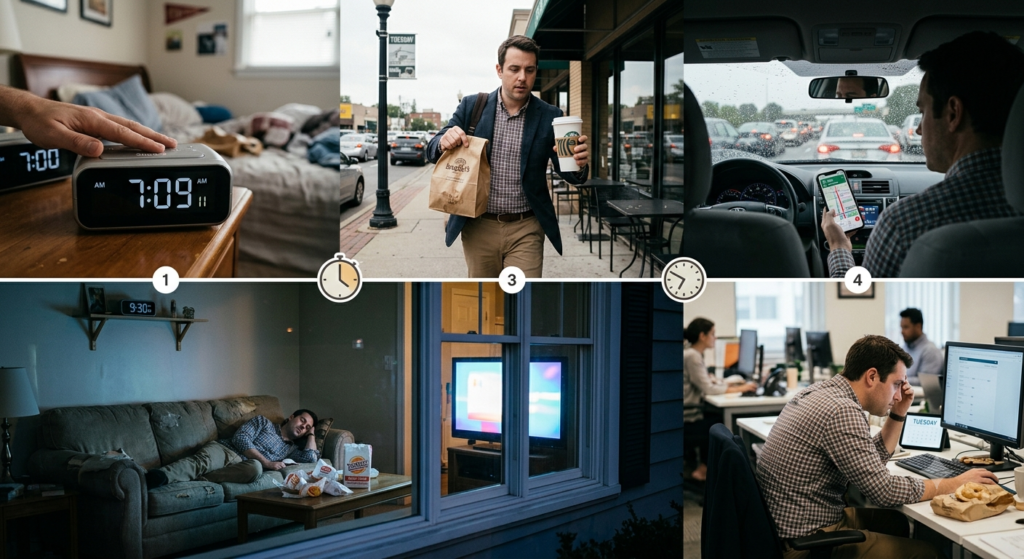
That routine — completely normal, completely American — is exactly why heart disease has been the country’s leading cause of death for more than 70 years straight. Not because Americans don’t care about their health, but because everyday life in the U.S. is built in a way that quietly stacks the odds against the heart.
This guide walks through everything you actually need to know: what heart disease really is, why it hits Americans so hard, the warning signs people brush off, and — most importantly — a realistic, doable plan to protect yourself starting today.
What Is Heart Disease?
“Heart disease” isn’t one single illness. It’s an umbrella term for anything that affects how well your heart works — its arteries, its muscle, its electrical system, or its valves.
The most common form is coronary artery disease, where plaque (a mix of cholesterol, fat, and other substances) builds up inside the arteries that feed your heart. Over years, this buildup narrows the arteries. When a piece of plaque breaks off and blocks blood flow completely, that’s a heart attack.
Other forms include heart failure (the heart still beats but can’t pump efficiently), arrhythmias (irregular heartbeats), and valve disease (the heart’s internal “doors” don’t open or close properly). Each one develops differently, but they all share the same root causes: years of wear and tear on the cardiovascular system, often driven by things we eat, how much we move, and how we handle stress.
Quick takeaway: Heart disease usually isn’t one dramatic event — it’s the result of small things adding up over decades.
Why Heart Disease Is So Common in the United States
Ask a cardiologist why heart disease is such a stubborn problem in America, and you’ll hear some version of the same answer: it’s not bad luck, it’s the environment. The American food system runs on convenience and portion size. Cities are built around cars, not walking. Work culture rewards long hours at a desk over movement. Stress is treated as a badge of honor instead of a health risk.
None of this means individual Americans are careless. It means the “default setting” of daily life quietly nudges people toward less activity, more processed food, and more chronic stress — the exact ingredients heart disease feeds on.
Actionable tip: You can’t redesign the whole country, but you can redesign your own defaults — what’s in your fridge, how you commute, and what your evenings look like. Small default changes beat willpower every time.
Current U.S. Heart Disease Statistics and Trends
The numbers are worth knowing, not to scare you, but because they show just how widespread this issue really is:
- Heart disease has been the leading cause of death in the U.S. since 1950.
- In 2023, cardiovascular disease caused 915,973 deaths — more than cancer and accidental deaths combined.
- More recent CDC data shows heart disease and stroke together caused over 850,000 deaths in 2024, more than 1 in 4 of all U.S. deaths.
- About 47% of U.S. adults — nearly half — have high blood pressure.
- Roughly 1 in 20 adults age 20+ has coronary artery disease.
- Someone in the U.S. has a heart attack every 40 seconds.
- About 1 in 3 U.S. adults received care for a cardiovascular risk factor or condition in a recent year.
There’s a genuinely hopeful trend hidden in here, too: total cardiovascular deaths dropped from 941,652 in 2022 to 915,973 in 2023, continuing a slow recovery from a pandemic-era spike. Progress is possible — it just requires sustained effort, both nationally and personally.
Where you live matters: Heart disease death rates vary sharply by state and region. The Southeast — often called the “Stroke Belt” — consistently shows some of the highest cardiovascular death rates in the country, driven by a mix of diet, healthcare access, and higher rates of obesity and diabetes. If you live in Mississippi, Alabama, Louisiana, Arkansas, or nearby states, your regional risk is statistically higher, which makes routine screening even more worth prioritizing.
The Most Common Types of Heart Disease
- Coronary artery disease (CAD) — narrowed arteries from plaque buildup; the leading cause of heart attacks.
- Heart failure — the heart can’t pump blood efficiently enough for the body’s needs.
- Arrhythmias, especially atrial fibrillation (AFib) — irregular heartbeats that raise stroke risk.
- Heart valve disease — valves that don’t open or close properly, forcing the heart to overwork.
- Congenital heart defects — structural issues present from birth, sometimes discovered in adulthood.
Actionable tip: If a family member has been diagnosed with one of these, ask them which type. It changes what you should watch for in your own health, since some types run more strongly in families than others.
Early Warning Signs People Often Ignore
This is where heart disease gets sneaky. Many early signs feel minor enough to brush off — especially in a culture that praises “pushing through.”
- Getting winded on stairs you used to handle easily
- Ongoing fatigue that sleep doesn’t fix
- Mild, recurring chest tightness that you blame on stress or heartburn
- Swelling in the ankles or feet by the end of the day
- A racing or fluttering heartbeat that comes and goes
- Waking up short of breath
Any one of these, especially if it’s new or getting worse, is worth mentioning to a doctor — not Googling and hoping it resolves on its own.
Real-life example: Dave, 44, drives a delivery route in Ohio. For weeks he noticed he was more winded carrying boxes up porch steps than usual, but chalked it up to “getting older” and one too many gas-station lunches. He didn’t mention it to anyone until his wife pointed out he’d been unusually tired for a month straight. His checkup found borderline-high blood pressure — caught early enough to manage with diet and exercise instead of medication. Dave’s story is common: the signs were there for weeks before he took them seriously.
Actionable tip: Keep a simple note on your phone every time something feels “off” with your energy, breathing, or heartbeat. Patterns are much easier to spot in writing than in memory.
Heart Attack Symptoms: Men vs. Women
This is one of the most searched heart-health topics for a reason — the symptoms genuinely differ, and that difference has real consequences.
| Symptom | More Common in Men | More Common in Women |
|---|---|---|
| Crushing chest pain or pressure | ✔️ Very common | Sometimes present, often milder |
| Pain radiating to left arm | ✔️ Common | Less predictable |
| Shortness of breath | Common | ✔️ Very common |
| Nausea or vomiting | Less common | ✔️ Common |
| Extreme fatigue (sometimes days before) | Less common | ✔️ Common |
| Jaw, neck, or back pain | Less common | ✔️ Common |
| Cold sweat | Common | Common |
Because women’s symptoms often skip the “textbook” chest-clutching moment, their heart attacks get missed or diagnosed later — one reason women face higher mortality after a heart attack than men do.
Real-life example: Maria, 52, from Texas, spent a Sunday feeling “off” — nauseous, exhausted, and achy in her jaw. No chest pain, so she assumed it was a stomach bug and went to bed early. It wasn’t until the fatigue hadn’t lifted by Tuesday that a coworker urged her to get checked out. It turned out to be a mild heart attack. Maria’s case is exactly why women are told to trust symptoms even when they don’t “look like” the movies.
Actionable tip: If something feels wrong and doesn’t match the “movie version” of a heart attack, treat it seriously anyway. Trust the discomfort, not the stereotype.
Major Risk Factors Behind Heart Disease
- Obesity — extra weight, especially around the belly, strains the heart and worsens blood pressure and cholesterol.
- Type 2 diabetes — high blood sugar damages blood vessels over time.
- High blood pressure — the “silent killer,” since it usually causes zero symptoms while quietly damaging arteries.
- Smoking and vaping — damages blood vessel walls and speeds up plaque buildup.
- Excessive alcohol use — raises blood pressure and adds empty calories.
- Chronic stress — keeps stress hormones elevated, which raises blood pressure and inflammation.
- Poor sleep, including untreated sleep apnea — linked to higher blood pressure and irregular heart rhythms.
- Sedentary lifestyle — the single most common thread tying together desk jobs, long commutes, and evenings on the couch.
These rarely show up alone. Someone juggling obesity, high blood pressure, and poor sleep faces a much steeper risk curve than any one factor suggests on its own.
Actionable tip: Instead of trying to fix everything at once, pick the one risk factor on this list that feels most “you” right now, and focus there first. Momentum matters more than perfection.
Why Americans Specifically Are at Higher Risk
A few uniquely American patterns feed directly into these risk factors:
- Fast food culture — convenient, cheap, and everywhere, but often loaded with sodium, refined carbs, and unhealthy fats.
- Ultra-processed foods — a huge share of the average American diet, linked to weight gain and inflammation.
- Sugary drinks — sodas, sweetened coffees, and energy drinks add massive amounts of sugar without anyone “feeling” like they ate anything.
- Desk jobs — long hours sitting with little built-in movement.
- Long commutes — more time in a car, less time walking or biking.
- Chronic lack of exercise — most U.S. adults don’t hit the recommended 150 minutes of weekly activity.
Actionable tip: You don’t need to overhaul your whole life. Swapping one sugary drink a day for water, or parking farther away to force a short walk, adds up over a year in ways that feel small daily but are significant cumulatively.
Typical American Breakfast vs. a Heart-Healthy Breakfast
| Typical American Breakfast | Heart-Healthy Swap |
|---|---|
| Sugary cereal + whole milk | Plain oatmeal with berries and cinnamon |
| Bagel with cream cheese | Whole-grain toast with avocado and egg |
| Bacon, eggs, hash browns, white toast | Eggs with spinach, turkey sausage, and fruit |
| Large sweetened coffee drink | Black coffee or coffee with a splash of milk |
| Toaster pastries or donuts | Greek yogurt with nuts and fresh fruit |
| Skipping breakfast, coffee only | A small protein-and-fiber snack, like a banana with peanut butter |
Actionable tip: You don’t have to swap everything overnight. Start with your drink — that’s usually the easiest win, since sugary morning drinks are one of the biggest hidden sugar sources in the American diet.
Healthy Choices at Popular Fast-Food Restaurants
Fast food isn’t going anywhere, and it doesn’t have to be off-limits. Smarter choices exist at almost every major chain:
- McDonald’s: Egg McMuffin instead of a biscuit sandwich; grilled chicken instead of crispy; side salad instead of fries.
- Chick-fil-A: Grilled chicken sandwich or nuggets instead of fried; fruit cup instead of waffle fries.
- Subway: 6-inch sub on whole wheat with turkey or chicken, loaded with vegetables, light on sauce.
- Chipotle: Burrito bowl (skip the tortilla) with grilled chicken or sofritas, beans, and extra veggies.
- Panera: Broth-based soups, half salads, and whole-grain bread options.
- Wendy’s: Grilled chicken sandwich or a side salad instead of a combo with fries and soda.
Actionable tip: The three biggest levers at any fast-food spot are: grilled instead of fried, water or unsweetened drink instead of soda, and a side salad instead of fries. Hitting just those three cuts a huge amount of sodium, sugar, and unhealthy fat.
Grocery Shopping Guide: Common U.S. Supermarket Foods
Choose more often:
- Leafy greens, broccoli, carrots, bell peppers
- Berries, apples, oranges, bananas
- Salmon, canned tuna, chicken breast, turkey
- Beans, lentils, chickpeas
- Oats, brown rice, quinoa, whole-grain bread
- Unsalted nuts and seeds
- Olive oil, avocado
- Plain Greek yogurt
Choose less often:
- Sugary cereals and toaster pastries
- Processed deli meats (bacon, sausage, cold cuts)
- Frozen dinners high in sodium
- Sodas and sweetened teas
- Packaged snack cakes and cookies
- Chips and heavily salted snack foods
Actionable tip: Shop the perimeter of the store first — that’s usually where produce, meat, and dairy live — and treat the center aisles as an “occasional” zone rather than the default.
A Realistic American Daily Routine — and Where the Risk Creeps In
6:30 AM — Wake up tired, skip breakfast or grab something sugary on the way out. 7:15 AM — Sit in traffic for 40 minutes, stressed about being late. 8:00 AM–5:00 PM — Sit at a desk almost all day, snack on vending machine food, drink multiple sodas or sweetened coffees. 5:45 PM — Sit in traffic again. 6:30 PM — Too tired to cook, order delivery or drive-thru. 8:00–11:00 PM — Sit on the couch, scroll on the phone, go to bed too late.
Add this up over a year, and you get: minimal movement, high sodium and sugar intake, chronic stress, and poor sleep — four of the biggest heart disease risk factors, baked directly into an ordinary workday.
Actionable tip: Pick one time block in this routine — the commute, lunch, or the evening — and insert 10–15 minutes of movement. A short walk after dinner is one of the highest-return changes you can make, since it help lowers blood sugar spikes and burns off some of the day’s stress.
The Cost of Heart Disease in the U.S. — And Why Prevention Actually Pays Off
Heart disease isn’t just a health issue — it’s one of the biggest financial burdens in American healthcare.
- Combined direct and indirect costs of cardiovascular disease exceed $500 billion a year and are projected to surpass $1 trillion by 2035.
- Adults treated for coronary heart disease face roughly $13,000 in extra annual healthcare costs; stroke patients face around $35,000; heart failure patients around $18,000.
- Total cardiovascular-related costs are projected to rise from $627 billion in 2020 to as much as $1.85 trillion by 2050.
These aren’t just abstract numbers for policymakers. They translate into higher insurance premiums, missed workdays, and personal medical bills that can upend a family’s finances. Prevention — the stuff covered in this guide — is dramatically cheaper than treatment, both for your wallet and your life expectancy.
Actionable tip: Think of your next checkup as a financial decision as much as a health one. Catching high blood pressure or high cholesterol early is far cheaper than treating a heart attack later.
Recommended Medical Tests and Screenings
- Blood pressure check — recommended for all adults starting at age 18, checked at every doctor visit.
- Cholesterol panel (lipid panel) — generally starting around age 20 if you have risk factors, or by your mid-30s to mid-40s otherwise; repeated every 4–6 years for most healthy adults.
- Blood sugar / A1C test — especially important if you’re overweight or have a family history of diabetes.
- Body mass index (BMI) and waist circumference — simple but useful markers your doctor tracks over time.
- EKG (electrocardiogram) — checks the heart’s electrical activity, often used if symptoms or risk factors are present.
- Stress test or echocardiogram — used when a doctor suspects reduced blood flow or heart function issues.
Actionable tip: If you don’t remember your last cholesterol or blood pressure numbers, that’s your cue to schedule a visit. You can’t manage a number you don’t know.
Treatment Options for Heart Disease
Treatment depends heavily on the specific condition and how advanced it is, but common options include:
- Lifestyle changes — diet, exercise, sleep, and stress management, often the first line of defense.
- Medications — blood pressure drugs, statins for cholesterol, blood thinners, or diabetes medications.
- Procedures — angioplasty and stents to open blocked arteries.
- Surgery — bypass surgery for severe blockages, valve repair or replacement when needed.
- Cardiac rehabilitation — a structured, supervised program of exercise and education after a heart event.
Actionable tip: If you’ve been prescribed medication and stopped taking it, or never picked it up from the pharmacy, that’s worth revisiting with your doctor rather than just deciding on your own that you don’t need it.
Daily Habits That Improve Heart Health
- Walking for at least 20–30 minutes most days
- Cooking at home more often than eating out
- Swapping sugary drinks for water most of the day
- Getting 7–9 hours of sleep
- Taking a few minutes daily for stress relief — deep breathing, a walk outside, or simply stepping away from screens
- Limiting alcohol to moderate levels
- Not smoking or vaping
Actionable tip: Pick one habit from this list to build for the next two weeks before adding another. Stacking too many changes at once is the most common reason people give up.
A 7-Day Beginner Heart-Health Plan
Day 1: Swap your usual sugary drink for water or unsweetened tea.
Day 2: Add a 15-minute walk after dinner.
Day 3: Cook one home meal using lean protein and vegetables instead of ordering out.
Day 4: Go to bed 30 minutes earlier than usual.
Day 5: Choose a grilled option instead of fried at any fast-food stop.
Day 6: Try 10 minutes of stretching, deep breathing, or a short walk outside for stress relief.
Day 7: Reflect — write down which of these felt doable, and pick two to keep going into next week.
Actionable tip: This plan works because it’s small and specific. You’re not trying to become a different person in a week — you’re testing which habits actually fit your life.
Best Foods and Foods to Avoid for Heart Health
Best foods:
- Salmon, sardines, and other fatty fish
- Leafy greens and cruciferous vegetables
- Berries and citrus fruits
- Oats and whole grains
- Beans, lentils, and legumes
- Nuts, seeds, and olive oil
- Plain Greek yogurt
Foods to limit:
- Processed and cured meats (bacon, sausage, deli meats)
- Sugary drinks and sodas
- Fried foods
- Packaged snacks high in sodium
- Refined white bread and pastries
- Foods high in trans fats (check labels for “partially hydrogenated oils”)
Actionable tip: You don’t need to eliminate every item in the “limit” list forever. Aim for these being occasional, not daily, and let the “best foods” list make up the bulk of your regular meals.
Heart Disease Myths vs. Facts
| Myth | Fact |
|---|---|
| “Heart disease only affects older people.” | It develops over decades and can start showing up in your 20s and 30s, even if symptoms appear later. |
| “If I feel fine, my heart is fine.” | Many forms of heart disease cause no symptoms until a major event happens. |
| “Only overweight people get heart disease.” | Thin people can have high cholesterol, high blood pressure, and heart disease too. |
| “Heart disease is mostly genetic, so lifestyle doesn’t matter.” | Genetics raise your baseline risk, but lifestyle heavily influences whether that risk turns into an actual event. |
| “Eggs are bad for your heart.” | Current research shows moderate egg consumption is fine for most people as part of an overall healthy diet. |
| “Heart attacks always come with obvious chest pain.” | Especially in women, symptoms can be subtle — fatigue, nausea, or shortness of breath. |
Actionable tip: If you’ve been avoiding a checkup because you “feel fine,” that’s exactly the myth this section is trying to bust.
Self-Assessment: Heart Disease Risk Checklist
Answer honestly — this isn’t a diagnosis, just a personal gut-check:
- [ ] I sit for more than 6 hours a day
- [ ] I eat fast food or takeout more than 3 times a week
- [ ] I drink sugary beverages daily
- [ ] I don’t know my current blood pressure or cholesterol numbers
- [ ] I have a parent or sibling who had a heart attack or stroke before age 55
- [ ] I smoke or vape
- [ ] I sleep less than 6 hours most nights
- [ ] I feel stressed most days without a real outlet
- [ ] I rarely get 30 minutes of exercise, even a few times a week
- [ ] I’ve been meaning to schedule a physical but keep putting it off
If you checked 3 or more: consider this your nudge to book a checkup soon and pick one habit from this guide to start this week.
Frequently Asked Questions
What is the number one cause of heart disease in America? There isn’t a single cause — it’s usually a combination of high blood pressure, high cholesterol, poor diet, inactivity, and smoking working together over time.
Can heart disease be reversed? Some aspects, like plaque buildup, can be slowed or partly improved with aggressive lifestyle change and medication, especially when caught early. Full reversal depends on the individual and condition, so this is a conversation for your doctor.
What age should I start worrying about heart disease? Risk factors like blood pressure and cholesterol are worth tracking starting in your 20s, since plaque buildup can begin decades before any symptoms show up.
Is heart disease genetic or lifestyle-related? Both. Family history raises your baseline risk, but daily habits heavily influence whether that risk turns into an actual heart attack or stroke.
What’s the first thing I should do if I’m worried about my heart? Book an appointment for a blood pressure check, cholesterol panel, and blood sugar test. These three numbers tell you more than almost anything you could look up online.
Does stress really cause heart disease? Chronic stress raises blood pressure and inflammation over time, both of which contribute directly to heart disease risk.
Emergency Warning Signs — When to Call 911
If you or someone near you has chest pain or pressure lasting more than a few minutes — especially with shortness of breath, cold sweat, nausea, or pain spreading to the arm, jaw, or back — call 911 immediately. Don’t drive yourself. Don’t wait to see if it passes. Every minute matters for how much heart muscle can be saved.
The Bottom Line
Heart disease has earned its place as America’s leading cause of death, but it isn’t unbeatable. It’s shaped by daily patterns — what’s for breakfast, how much you move, how you handle a stressful day — and those patterns are things you have real control over, starting right now.
You don’t need to overhaul your entire life this week. Pick one swap from this guide — the drink, the walk, the checkup you’ve been avoiding — and start there. Small, consistent choices, repeated over months and years, are exactly what protect a heart for the long run.
This article is for informational purposes only and does not replace professional medical advice, diagnosis, or treatment. Always consult a licensed healthcare provider about your individual health.
Sources: Centers for Disease Control and Prevention (CDC), American Heart Association 2026 Heart Disease and Stroke Statistics Update, Journal of the American College of Cardiology (JACC) Cardiovascular Statistics 2026, U.S. Preventive Services Task Force (USPSTF).
Also Read this – https://healthteips.com/heart-disease-symptoms-causes-prevention/