Introduction
If you have ever wondered, “What should I eat in a day to stay healthy?” you are certainly not alone. With countless diet trends, conflicting nutritional advice, and social media influencers promoting restrictive eating plans, deciding what belongs on your plate can feel overwhelming. The good news is that you do not need expensive superfoods or extreme dieting methods to maintain good health. In fact, a well-balanced Indian diet can provide all the nutrients your body needs while still allowing you to enjoy delicious and familiar foods.
The traditional Indian diet has long been recognized for its variety, nutritional value, and use of whole ingredients. From protein-rich lentils and fiber-packed vegetables to healthy grains and fermented foods, Indian cuisine offers countless options for creating a balanced meal plan. Whether your goal is weight management, improved energy levels, better digestion, blood sugar control, or simply adopting healthier eating habits, understanding what to eat in a day can help you build a sustainable lifestyle.
A healthy Indian diet is not about eliminating entire food groups or following unrealistic restrictions. Instead, it focuses on balance, portion control, and making thoughtful food choices throughout the day. By combining carbohydrates, proteins, healthy fats, vitamins, and minerals in the right proportions, you can support your overall well-being while enjoying meals that suit your taste preferences and cultural traditions.
This complete Indian diet plan provides a practical guide to help you structure your daily meals. From breakfast and mid-morning snacks to lunch, evening refreshments, and dinner, this guide explains how to create nutritious meals that support long-term health.
Why a Balanced Indian Diet Works
The Indian diet naturally incorporates a wide variety of nutrient-dense foods that contribute to overall wellness. Unlike many fad diets that rely on severe calorie restriction, a balanced Indian meal plan emphasizes moderation and diversity.
Whole grains such as wheat, brown rice, millet, oats, and barley provide complex carbohydrates that deliver steady energy throughout the day. Lentils, beans, dairy products, eggs, and lean meats contribute high-quality protein necessary for muscle repair, immune function, and satiety. Fresh vegetables and fruits offer essential vitamins, antioxidants, and dietary fiber that support digestion and reduce the risk of chronic diseases.
One of the greatest strengths of an Indian diet plan is its flexibility. It can easily accommodate vegetarian, vegan, or non-vegetarian preferences while meeting individual nutritional needs. This adaptability makes it easier to follow consistently, which is one of the most important factors in maintaining healthy eating habits.
Following a healthy Indian diet can help improve metabolic health, support healthy weight management, promote stable blood sugar levels, enhance digestive function, and contribute to long-term cardiovascular health. Rather than focusing solely on weight loss, a balanced approach encourages sustainable lifestyle changes that benefit both physical and mental well-being.
Starting Your Day the Right Way
The first few hours after waking up play an important role in setting the tone for the rest of the day. After several hours without food or water during sleep, your body requires hydration and nourishment to function optimally.
Beginning your morning with a glass of water helps replenish fluids lost overnight and supports proper digestion. Some people prefer warm water with lemon, while others choose plain water or herbal beverages. Although these options are not magical solutions for weight loss, they can encourage hydration and establish a healthy morning routine.
Including a few soaked almonds or walnuts can provide healthy fats, antioxidants, and micronutrients that contribute to overall health. Developing mindful morning habits can help reduce unnecessary cravings later in the day and prepare your body for a nutritious breakfast.
The Importance of a Healthy Breakfast
Breakfast is often described as the most important meal of the day because it provides the energy needed to begin daily activities. A nutritious breakfast replenishes glucose stores, supports concentration, and helps regulate appetite throughout the day.
Unfortunately, many people either skip breakfast entirely or choose highly processed foods that are high in refined carbohydrates and added sugars. These choices may lead to energy crashes and increased hunger later in the day.
An ideal Indian breakfast should include a combination of complex carbohydrates, protein, healthy fats, and fiber. This balanced approach helps maintain steady blood sugar levels and promotes prolonged satiety.
Traditional Indian breakfast options can easily meet these nutritional requirements. Dishes such as vegetable poha prepared with peanuts provide carbohydrates along with healthy fats and protein. Moong dal chilla offers a protein-rich alternative that supports muscle maintenance and keeps hunger under control. Idli served with sambar delivers a satisfying combination of fermented grains and protein-rich lentils that benefit digestive health.
Vegetable upma prepared with semolina and fresh vegetables provides sustained energy, while besan chilla made from gram flour contributes valuable plant-based protein. For individuals who enjoy heartier breakfasts, whole wheat parathas stuffed with vegetables and paired with yogurt can offer a balanced meal when prepared with moderate amounts of oil.
The key to a successful breakfast is consistency. Regularly consuming a nourishing morning meal can improve energy levels, reduce overeating later in the day, and support better dietary choices overall.
Mid-Morning Nutrition and Healthy Snacking
Several hours after breakfast, it is common to experience mild hunger. Rather than reaching for processed snacks or sugary beverages, choosing nutrient-dense foods during this period can help maintain stable energy levels and prevent excessive hunger before lunch.
Fresh fruits provide an excellent source of vitamins, minerals, antioxidants, and natural fiber. Seasonal options such as apples, oranges, papaya, guava, and berries can satisfy sweet cravings while contributing important nutrients to your diet.
Hydrating beverages like coconut water and buttermilk can also serve as refreshing choices that support fluid balance. Incorporating moderate portions of nuts or roasted chickpeas may further enhance satiety due to their protein and healthy fat content.
Healthy snacking should complement your overall nutritional intake rather than replace balanced meals. Paying attention to hunger cues and portion sizes allows you to enjoy snacks without contributing to unnecessary calorie consumption.
Building a Balanced Indian Lunch
Lunch often represents the largest meal of the day and provides an opportunity to incorporate a variety of nutrient-rich foods. A well-balanced Indian lunch should include carbohydrates, protein, vegetables, and healthy fats in appropriate proportions.
Whole wheat rotis, brown rice, millet-based breads, or other whole grains can serve as the primary source of complex carbohydrates. These foods provide sustained energy and support healthy digestion through their fiber content.
Protein is equally important during lunch because it contributes to muscle maintenance, hormone production, and appetite regulation. Lentils such as dal, chickpeas, kidney beans, paneer, tofu, eggs, fish, or lean poultry can all fulfill this role effectively.
Vegetables should occupy a significant portion of the lunch plate. Including a variety of colorful vegetables ensures a broad intake of vitamins, minerals, and phytochemicals that support immune function and overall health.
Fermented dairy products such as yogurt or buttermilk may further enhance digestive health by supplying beneficial probiotics. Combining these food groups creates meals that are both satisfying and nutritionally balanced.
For example, a lunch consisting of whole wheat rotis, dal, mixed vegetable curry, salad, and yogurt offers a comprehensive nutritional profile. Similarly, brown rice paired with rajma and fresh vegetables can provide a nourishing and filling meal suitable for individuals seeking healthy weight management.
The Role of Protein in an Indian Diet
One of the most common nutritional gaps observed in many Indian diets is inadequate protein intake. Although carbohydrates form the foundation of many traditional meals, ensuring sufficient protein consumption is essential for maintaining overall health.
Protein supports numerous physiological functions, including muscle growth and repair, enzyme production, immune system function, and hormone regulation. Additionally, protein-rich foods tend to increase feelings of fullness, which may help prevent overeating and support healthy body composition.
Vegetarian sources of protein include lentils, chickpeas, kidney beans, soy products, paneer, milk, yogurt, and nuts. Individuals who consume animal products can also obtain protein from eggs, poultry, fish, and lean meats.
Distributing protein intake evenly throughout the day rather than consuming the majority at one meal may improve satiety and optimize muscle protein synthesis. Including protein at breakfast, lunch, dinner, and even snacks can contribute significantly to overall nutritional adequacy.
Healthy Evening Snacks That Support Your Goals
As the day progresses, many people experience a dip in energy levels during the late afternoon or early evening. This is often the time when unhealthy food choices become tempting. Processed snacks, sugary beverages, fried foods, and packaged convenience items can quickly add excess calories without providing meaningful nutrition.
Choosing healthier evening snacks can help maintain steady energy levels, prevent overeating at dinner, and support overall dietary goals. The ideal snack should provide a balance of protein, fiber, and healthy fats while satisfying hunger until the next meal.
Roasted makhana, also known as fox nuts, has become increasingly popular as a healthy Indian snack because it is light yet satisfying. Sprouted legumes combined with fresh vegetables and mild seasonings create a nutrient-dense option rich in plant-based protein and fiber. Roasted chickpeas offer another excellent alternative that promotes fullness and sustained energy.
For those who prefer something lighter, a serving of fresh fruit paired with a handful of nuts can provide natural sweetness while delivering essential nutrients. Homemade vegetable sandwiches prepared with whole-grain bread and moderate amounts of healthy spreads can also serve as a balanced evening meal.
The objective of an evening snack is not simply to satisfy cravings but to nourish the body while supporting healthy eating habits. Planning snacks ahead of time can reduce the likelihood of making impulsive food choices driven by convenience rather than nutritional value.
Planning a Healthy Indian Dinner
Dinner plays a significant role in completing a balanced day of eating. While many people believe that skipping dinner can accelerate weight loss, this approach often leads to increased hunger, disrupted sleep, and poor food choices later on.
A healthy Indian dinner should be lighter than lunch while still providing adequate nutrients to support overnight recovery and satiety. Meals that emphasize vegetables, lean protein sources, and moderate portions of whole grains tend to promote better digestion and overall well-being.
Simple meals such as vegetable khichdi prepared with lentils and rice offer comfort while supplying a combination of carbohydrates and protein. Whole wheat chapatis served with vegetable curry and dal can create a balanced plate without feeling overly heavy.
Paneer stir-fries, tofu-based dishes, and lentil soups represent excellent vegetarian dinner choices that contribute valuable protein. Individuals who consume animal products may opt for grilled fish, lean chicken preparations, or egg-based meals accompanied by vegetables.
Timing also matters when it comes to dinner. Eating two to three hours before bedtime allows sufficient time for digestion and may contribute to improved sleep quality. Consuming excessively large meals late at night, on the other hand, can result in discomfort and negatively impact energy levels the following day.
Rather than focusing on strict dietary rules, dinner should provide nourishment while aligning with individual hunger cues and lifestyle preferences.
The Importance of Hydration Throughout the Day
While much attention is given to food choices, adequate hydration is equally essential for maintaining good health. Water participates in numerous bodily functions, including temperature regulation, nutrient transport, digestion, and waste elimination.
Even mild dehydration can contribute to fatigue, reduced concentration, headaches, and impaired physical performance. Additionally, thirst is sometimes mistaken for hunger, leading individuals to consume unnecessary calories when the body actually requires fluids.
Most adults benefit from consuming approximately two and a half to three liters of fluids daily, although individual requirements may vary depending on age, activity level, climate, and overall health status.
Plain water remains the best choice for hydration. However, beverages such as buttermilk, coconut water, herbal teas, and infused water can contribute to overall fluid intake while providing variety.
Limiting sugar-sweetened beverages is equally important. Soft drinks, energy drinks, and excessive fruit juice consumption may contribute to increased calorie intake without offering substantial nutritional benefits.
Developing the habit of drinking water consistently throughout the day can support digestion, maintain energy levels, and complement a healthy Indian diet plan.
Indian Diet Plan for Healthy Weight Loss
Weight loss remains one of the primary reasons people seek dietary guidance. However, sustainable weight management differs significantly from restrictive dieting practices that promise rapid results.
A healthy Indian diet for weight loss emphasizes nutrient density, portion control, and long-term behavioral changes rather than extreme calorie restriction. The goal is to create a modest calorie deficit while ensuring adequate nutrition and preserving lean body mass.
Including sufficient protein at each meal can support satiety and reduce the likelihood of excessive snacking. Whole grains such as oats, brown rice, millet, and whole wheat products provide fiber that contributes to prolonged fullness.
Vegetables should occupy a substantial portion of meals because they provide volume with relatively few calories. Fruits can satisfy sweet cravings while delivering vitamins and antioxidants.
Equally important is reducing the intake of highly processed foods that are rich in added sugars, unhealthy fats, and refined carbohydrates. While occasional indulgences can fit within a balanced lifestyle, consistency in making nutritious choices is essential for long-term success.
Physical activity further enhances the effectiveness of dietary modifications. Combining healthy eating habits with regular exercise can improve body composition, cardiovascular health, and metabolic function.
Rather than pursuing perfection, individuals should focus on making gradual improvements that can be maintained over time. Sustainable habits consistently outperform short-term dieting approaches.
Supporting Blood Sugar Balance Through Healthy Eating
For individuals managing diabetes or seeking to maintain stable blood sugar levels, thoughtful meal planning becomes especially important. Although nutritional needs vary among individuals, certain principles can support metabolic health.
Choosing complex carbohydrates over refined grains may help reduce rapid fluctuations in blood glucose levels. Whole grains, legumes, vegetables, and fruits with higher fiber content contribute to slower digestion and improved glycemic control.
Including protein and healthy fats alongside carbohydrate-containing foods can further moderate blood sugar responses after meals. Consistent meal timing may also help support better glucose management.
Portion awareness remains an important aspect of dietary planning. Even nutritious foods should be consumed in amounts appropriate for individual energy requirements and health goals.
Working with healthcare providers or registered dietitians can help develop personalized nutrition strategies that address specific medical needs while incorporating culturally familiar Indian foods.
Healthy Eating Habits That Make a Difference
The foods consumed throughout the day are important, but overall eating behaviors also significantly influence health outcomes. Small, consistent habits often have a greater impact than dramatic dietary overhauls.
Mindful eating encourages individuals to pay attention to hunger and fullness cues while minimizing distractions during meals. Eating slowly allows the body adequate time to register satiety, potentially reducing overeating.
Meal planning and preparation can simplify healthy eating by reducing dependence on convenience foods. Keeping nutritious ingredients readily available makes it easier to assemble balanced meals even during busy periods.
Adequate sleep also plays a role in appetite regulation and food choices. Sleep deprivation can alter hunger hormones and increase cravings for calorie-dense foods.
Stress management is another important consideration. Emotional stress often influences eating behaviors, leading some individuals to seek comfort in highly processed foods. Incorporating stress-reduction practices such as exercise, meditation, or hobbies may indirectly support healthier dietary habits.
Ultimately, building a healthy relationship with food involves flexibility rather than rigid rules. Enjoying meals, celebrating cultural traditions, and maintaining balance contribute to sustainable lifestyle changes.
A Sample Full-Day Indian Diet Plan
A practical example of a balanced Indian diet can help illustrate how these principles fit together throughout the day.
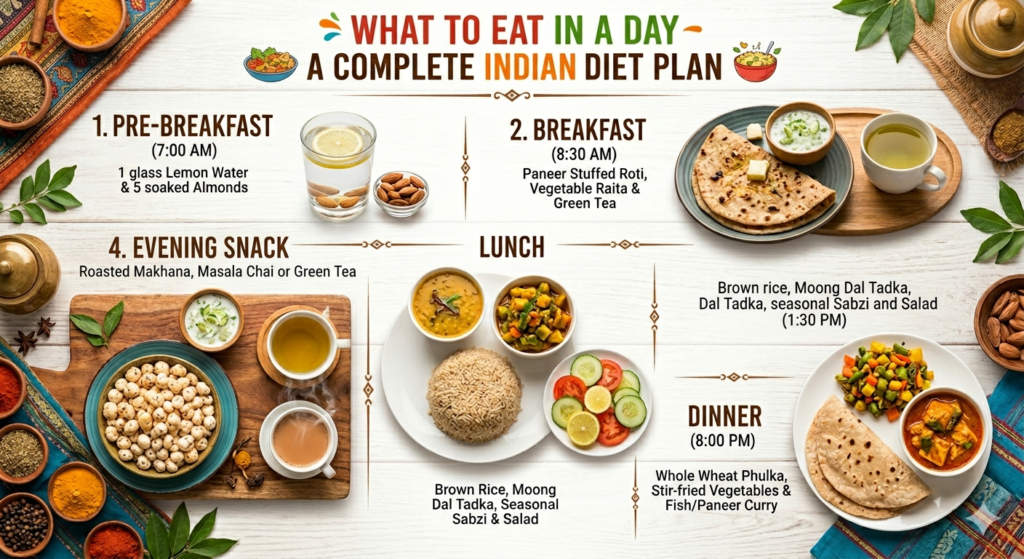
The morning may begin with a glass of water followed by a few soaked almonds. Breakfast could consist of moong dal chilla accompanied by mint chutney and unsweetened tea.
A mid-morning snack might include a serving of seasonal fruit along with coconut water to maintain hydration and energy levels.
Lunch can feature whole wheat chapatis, a bowl of dal, mixed vegetable curry, fresh salad, and yogurt. This combination provides carbohydrates, protein, fiber, and beneficial bacteria that support digestive health.
During the evening, roasted makhana and herbal tea may help bridge the gap between lunch and dinner without contributing excessive calories.
Dinner could consist of vegetable khichdi served with yogurt and a side salad. This meal provides nourishment while remaining light enough to promote comfortable digestion before bedtime.
If desired, a small serving of warm milk later in the evening may offer comfort and contribute additional protein and calcium intake.
This sample plan demonstrates that healthy eating does not require complicated recipes or restrictive practices. Familiar Indian foods can easily be incorporated into a balanced approach to nutrition.
Common Mistakes to Avoid
Many individuals unintentionally undermine their health goals through habits that appear harmless but can significantly impact nutritional balance.
Skipping meals in an attempt to reduce calorie intake often leads to increased hunger and overeating later in the day. Similarly, relying heavily on packaged diet foods may create a false sense of security despite their frequent inclusion of added sugars and sodium.
Eliminating entire food groups without medical necessity can result in nutritional deficiencies and unnecessary dietary restrictions. Carbohydrates, proteins, and fats all serve important physiological functions and should generally be included in balanced proportions.
Another common mistake involves underestimating portion sizes. Even healthy foods contribute calories, making portion awareness an important aspect of maintaining energy balance.
Finally, expecting immediate results from dietary changes can lead to frustration and abandonment of healthy habits. Lasting improvements in health occur gradually through consistent actions repeated over time.
Frequently Asked Questions
Many people wonder whether rice can be included in a healthy Indian diet. The answer is yes. Rice can absolutely be part of a balanced meal when consumed in appropriate portions and paired with protein-rich foods and vegetables.
Others question whether breakfast should ever be skipped. While individual preferences differ, regularly consuming a nutritious breakfast may support improved energy levels and appetite regulation for many people.
A common concern involves identifying the best Indian breakfast for weight loss. Protein-rich options such as moong dal chilla, vegetable omelets, idli with sambar, and vegetable upma can all support healthy weight management when incorporated into an overall balanced diet.
Hydration requirements also vary among individuals. Most adults should aim for approximately two and a half to three liters of fluid daily, adjusting intake based on activity levels and environmental conditions.
Perhaps the most important question is whether a healthy Indian diet is sustainable. The answer is undoubtedly yes. Because it relies on familiar foods and flexible principles rather than rigid restrictions, it can be maintained as a long-term lifestyle approach.
Conclusion
Understanding what to eat in a day does not have to be complicated. A balanced Indian diet built around whole grains, vegetables, fruits, protein-rich foods, healthy fats, and adequate hydration can provide the foundation for lifelong health and wellness.
Rather than chasing temporary dietary trends, focusing on consistency and moderation allows individuals to create habits that support sustainable results. Healthy eating is not about perfection, deprivation, or eliminating favorite foods. It is about making informed choices that nourish the body while fitting realistically into everyday life.
Whether your goal is weight management, improved energy, better digestion, or overall well-being, adopting a thoughtful Indian meal plan can help you move toward those objectives with confidence.
The journey toward better health begins with small decisions repeated consistently over time. By understanding how to structure balanced meals throughout the day, you can develop an approach to nutrition that is both enjoyable and effective. Ultimately, the best diet is one that supports your health while allowing you to appreciate the rich flavors and traditions of Indian cuisine.