
What is nutrition?
Nutrition is the process of consuming food and using the nutrients it contains to support growth, energy production, tissue repair, immune function, and overall health. It’s not about eating perfectly—it’s about understanding how different foods fuel your body and making consistent choices that keep you feeling good.
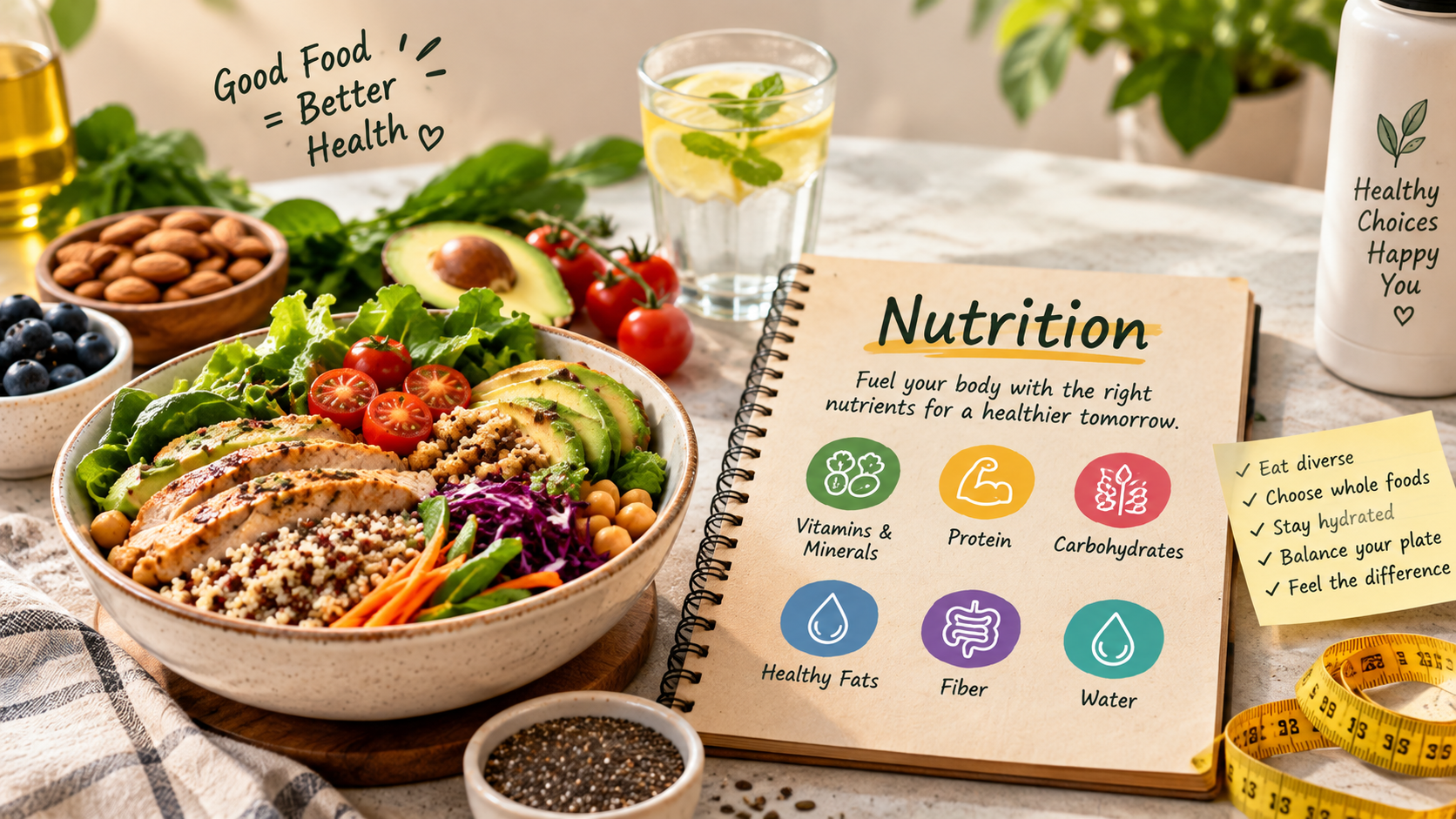
What Is Nutrition? Understanding the Basics
Nutrition sounds complicated, but it’s fundamentally simple: it’s the relationship between food and your body’s health.
When you eat an apple, your body doesn’t see “an apple.” Instead, it breaks that apple down into specific nutrients—fiber, vitamins, minerals, water, natural sugars—and uses each component for different purposes. Fiber helps your digestive system. Vitamin C supports your immune system. Minerals keep your bones strong. This process of breaking down food and using what it contains to keep your body functioning is nutrition.
Why Nutrition Matters
Your body is constantly doing three things with the food you eat:
- Using it for energy so you can think, move, and function
- Using it to build and repair tissues like muscles, bones, skin, and organs
- Using it to regulate processes like digestion, immunity, hormone production, and blood pressure
Without adequate nutrition, none of these things work well. You feel tired. Your immune system weakens. Your digestion suffers. Your mood drops. Your concentration fades.
Conversely, when you’re well-nourished, you have energy, resilience, mental clarity, better digestion, stronger immunity, and a general sense of wellbeing. This isn’t about looking a certain way or following a diet—it’s about how you actually feel.
Food vs. Nutrients
Here’s an important distinction: eating food and eating nutrients are not the same thing.
When you eat a piece of chicken, you’re not really eating “chicken”—you’re eating the protein, B vitamins, selenium, and other nutrients that chicken contains. When you eat a bowl of oatmeal, you’re eating fiber, carbohydrates, B vitamins, magnesium, and beta-glucan (a type of fiber with special properties).
Understanding this distinction changes how you look at food. It stops being about “good foods” and “bad foods” and starts being about “what nutrients does this food contain, and do I need it right now?”
How Nutrition Works Throughout Life
Your nutritional needs change depending on your age, activity level, health status, and life circumstances. A 5-year-old needs different nutrition than a 50-year-old. An athlete needs different nutrition than someone with a sedentary job. A pregnant woman has different nutritional needs than a non-pregnant woman.
This is why there’s no single “perfect diet” for everyone. Your nutrition needs to be personalized to your actual life—not to an ideal life, but to the life you’re living right now.
What Does a Healthy Diet Actually Look Like?
This question is harder to answer than it should be, mainly because there are dozens of competing diets all claiming to be the “healthiest.”
But if you step back from the marketing noise, a healthy diet—one that will support your energy, digestion, immunity, and overall wellbeing—shares several consistent principles:
Balance
A healthy diet includes foods from all nutrient groups. You need:
- Protein (to build and repair tissue)
- Carbohydrates (to fuel your brain and body)
- Healthy fats (to support hormone production and nutrient absorption)
- Fiber (to support digestion and fullness)
- Vitamins and minerals (to support every function in your body)
- Water (to keep everything running)
No single food contains all of these in ideal amounts. That’s why balance—getting nutrients from a variety of sources—matters.
Variety
Eating the same foods repeatedly means you’re likely missing nutrients that other foods contain. Different colored vegetables have different nutrients. Different grains have different fiber profiles. Different proteins have different micronutrient profiles.
The practical advice you’ve probably heard—”eat the rainbow”—actually reflects real nutritional science. Variety naturally leads to nutrient diversity.
Moderation
Healthy eating isn’t about restriction. It’s about appropriate amounts. You can overeat healthy foods. You can eat less healthy foods occasionally without derailing your health. Moderation means eating enough to fuel your body without excess.
Nutrient Density
Some foods deliver more nutrients per calorie than others. Spinach is nutrient-dense (lots of nutrients, relatively few calories). A cookie is calorie-dense but nutrient-sparse (lots of calories, relatively few nutrients).
Focusing on nutrient-dense foods means you get more of what your body needs without overdoing calories. This naturally supports energy, satiation, and better health markers.
Adequacy
Your diet should contain enough of each nutrient to meet your body’s needs. Not excessively more, but definitely not less. This ties back to knowing your own needs—a 6’4″ athletic man has different nutritional adequacy targets than a 5’2″ sedentary woman.
Flexibility
Here’s something most diet culture won’t tell you: a healthy diet doesn’t have to be identical every single day. Healthy eating is built through patterns over weeks and months, not perfect choices every meal.
You can eat a slice of pizza and still have healthy nutrition. You can enjoy your grandmother’s traditional recipe and still have healthy nutrition. You can have a day where you eat less perfectly and still have healthy nutrition. What matters is the overall pattern.
The Building Blocks of Nutrition
Your body needs specific substances to function. These break into two categories: macronutrients (needed in large amounts) and micronutrients (needed in small amounts). Let’s explore each.
Protein: The Building Block Nutrient
What it is: Protein is made up of amino acids, which are organic compounds your body uses to build and repair virtually everything—muscles, bones, skin, hair, enzymes, hormones, and immune cells.
Why your body needs it: You can’t survive without protein. Your body uses it to build new tissue, maintain existing tissue, produce enzymes and hormones, and support immune function. Even when you’re resting, your body is constantly breaking down old protein and building new protein.
Common sources:
- Animal: chicken, beef, fish, eggs, Greek yogurt, cottage cheese, milk, cheese
- Plant: beans, lentils, chickpeas, tofu, tempeh, nuts, seeds, whole grains (though plant proteins often need to be combined to get all amino acids)
What a practical serving looks like:
- 3-4 oz of chicken (about the size of a deck of cards)
- 1 cup of Greek yogurt
- 1 cup of cooked beans
- 2 eggs
- A palm-sized portion of fish
- ¼ cup of nuts
Common misconception: “I need to eat a lot of protein to be healthy” or “Protein only comes from meat.”
The reality: While adequate protein matters, more isn’t always better. Most Americans actually get plenty of protein. And protein comes from many sources—beans and lentils are excellent plant-based protein sources.
Carbohydrates: Your Body’s Primary Fuel
What they are: Carbohydrates are compounds made of carbon, hydrogen, and oxygen. They break down into glucose (blood sugar), which your brain and muscles use for energy.
Why your body needs them: Your brain alone uses about 20% of your daily calories, and it prefers to use glucose for fuel. Your muscles use glucose during activity. Carbohydrates are your body’s primary, most efficient energy source.
Common sources:
- Whole grains: brown rice, oats, whole wheat bread, quinoa, barley
- Fruits: apples, bananas, berries, oranges
- Vegetables: potatoes, sweet potatoes, corn, peas
- Legumes: beans, lentils
- Refined: white bread, white rice, pasta, sugary foods
What a practical serving looks like:
- 1 slice of whole grain bread
- ½ cup of cooked rice or pasta
- 1 medium piece of fruit
- 1 cup of vegetables
- ½ cup of cooked beans
Common misconception: “Carbs are bad and cause weight gain.”
The reality: Carbohydrates aren’t inherently fattening. Your body needs them for energy and brain function. What matters is the type and amount. Whole grain carbs with fiber are different from refined carbs. Moderate amounts are different from excessive amounts.
Dietary Fiber: The Often-Overlooked Nutrient
What it is: Fiber is a type of carbohydrate your body can’t digest. Instead, it passes through your digestive system mostly intact, doing important work along the way.
Why your body needs it:
- Supports healthy digestion and bowel regularity
- Feeds beneficial bacteria in your gut
- Helps you feel full longer (supporting satiation)
- May support heart health
- May support blood sugar control
Common sources:
- Whole grains: oats, whole wheat, brown rice
- Vegetables: broccoli, carrots, Brussels sprouts, sweet potatoes
- Fruits: raspberries, pears, apples (with skin), bananas
- Legumes: beans, lentils, chickpeas
- Seeds and nuts: chia seeds, flax seeds, almonds
What practical fiber intake looks like:
- A bowl of oatmeal with berries (about 8g fiber)
- A salad with mixed vegetables (about 5-7g fiber)
- A bean-based lunch (about 8-10g fiber)
- A banana and handful of almonds (about 5g fiber)
Common misconception: “I need a special fiber supplement to get enough fiber.”
The reality: Most people can get adequate fiber from whole foods. Gradually increasing vegetables, fruits, whole grains, and legumes is usually more sustainable than supplements.
Fats: Essential and Often Misunderstood
What they are: Fats are energy-dense compounds your body uses for hormone production, nutrient absorption, brain health, and cell structure.
Why your body needs them: Your brain is roughly 60% fat. Your hormones are made from fat. Fat helps you absorb vitamins A, D, E, and K. Fat keeps your skin healthy. Your body can’t function without it.
Types and sources:
Unsaturated fats (generally considered beneficial):
- Olive oil, avocado oil
- Nuts and seeds
- Avocados
- Fatty fish (salmon, mackerel, sardines)
- These support heart health and provide omega-3 fatty acids
Saturated fats (eat less of these, but they’re not evil):
- Butter, coconut oil
- Fatty cuts of meat
- Full-fat dairy
- Moderate amounts are fine; excessive amounts are associated with heart disease risk
Trans fats (avoid these):
- Partially hydrogenated oils (now banned in the US for new products)
- Some processed foods
- These are associated with negative health effects
What a practical serving looks like:
- 1 tablespoon of olive oil
- 1 ounce of nuts (small handful)
- Half an avocado
- A salmon fillet
- 1 tablespoon of nut butter
Common misconception: “Eating fat makes you fat.”
The reality: Fat is essential for health. Excessive calories from any source can lead to weight gain, but eating moderate amounts of healthy fat doesn’t cause weight gain and actually supports satiation and nutrient absorption.
Vitamins and Minerals: The Micronutrients
What they are: Vitamins and minerals are organic and inorganic compounds your body needs in small amounts to support virtually every function—energy production, immunity, bone health, blood clotting, muscle function, and more.
We’ll go deeper into specific vitamins and minerals in a later section, but the important concept here is that you need variety to get all of them.
Water: The Overlooked Essential
What it is: Water is literally the medium in which all your body’s chemical processes happen.
Why your body needs it: Water transports nutrients, removes waste, regulates temperature, cushions joints, protects organs, and enables digestion. Dehydration affects energy, concentration, digestion, and athletic performance.
How much: This varies based on activity level, climate, and individual factors, but a general guideline is around 8-10 cups per day, though many people need more if they’re active or live in a hot climate. A practical approach: drink enough that your urine is pale yellow most of the time.
Common sources: Water, tea, coffee, milk, juice, fruits, vegetables (most foods contain water)
Calories and Energy
What they are: A calorie is a unit of energy. Food contains calories (energy). Your body uses calories (energy) to function.
Why it matters: Your body needs a certain amount of energy to function. If you consistently eat more calories than you use, the excess is stored as fat. If you consistently eat fewer calories than you use, your body uses stored energy (fat) for fuel. Balance matters for weight stability.
However: Not all calories are created equal in terms of nutrition or satiation. 100 calories of almonds (protein, healthy fat, fiber) affects your body differently than 100 calories of soda (added sugar, no nutrients).
Macronutrients vs. Micronutrients: A Quick Comparison
| Category | What It Includes | Main Role | Common Food Sources | Why It Matters |
|---|---|---|---|---|
| Macronutrients (needed in large amounts) | ||||
| Protein | Amino acids | Build and repair tissue; make enzymes and hormones | Meat, fish, eggs, beans, nuts, dairy | Essential for muscle, bone, immune health |
| Carbohydrates | Sugars, starches, fiber | Energy production; brain function; fiber for digestion | Grains, fruits, vegetables, legumes | Primary fuel source; supports digestive health |
| Fats | Unsaturated, saturated fats | Hormone production; nutrient absorption; brain health | Oils, nuts, avocados, fish, dairy | Essential for hormone and brain health |
| Water | H₂O | Transport nutrients; regulate temperature; enable digestion | Water, beverages, foods | Enables all body functions |
| Micronutrients (needed in small amounts) | ||||
| Vitamins | Organic compounds (A, B, C, D, E, K) | Support energy, immunity, vision, bone health, more | Varies by vitamin; vegetables, fruits, fortified foods | Prevent deficiencies; support specific functions |
| Minerals | Inorganic compounds (calcium, iron, zinc, magnesium, more) | Support bone health, oxygen transport, muscle function, immune health | Varies by mineral; dairy, leafy greens, meat, legumes | Prevent deficiencies; support specific functions |
Protein: How Much Do You Actually Need?
Protein gets a lot of attention—sometimes too much. Let’s look at what the science actually says.
Protein Basics
Your body uses protein to build and maintain muscle, bone, skin, hair, enzymes, hormones, and antibodies. You need it every single day because your body is constantly breaking down old protein and building new protein.
How Much Is “Enough”?
The basic recommended dietary allowance (RDA) from the U.S. Department of Agriculture is approximately 0.8 grams of protein per kilogram of body weight (or about 0.36 grams per pound).
For a 150-pound person, that’s roughly 54 grams of protein per day. For a 200-pound person, it’s about 72 grams.
However, this is the minimum to prevent deficiency. Many people feel better and maintain muscle better with more protein, especially if they’re:
- Older (protein needs increase with age)
- Exercising regularly
- Trying to build or maintain muscle
- Recovering from illness
A practical target for many active adults is 1.2-2.0 grams per kilogram of body weight (or 0.5-0.9 grams per pound).
Practical Protein Sources
Animal proteins:
- 3 oz chicken: 26g protein
- 3 oz beef: 22g protein
- 3 oz fish: 19-22g protein
- 2 eggs: 12g protein
- 1 cup Greek yogurt: 15-20g protein
- 1 cup milk: 8g protein
- ¼ cup cottage cheese: 7g protein
Plant proteins:
- 1 cup cooked beans: 12-15g protein
- 1 cup cooked lentils: 18g protein
- ¼ cup nuts: 6-8g protein
- 2 tablespoons peanut butter: 8g protein
- 1 ounce seeds: 4-8g protein
- 1 cup tofu: 10-15g protein
- 1 cup tempeh: 19g protein
Combination approach: A bowl of rice and beans (1 cup each) provides 12g protein from rice plus 14g from beans = 26g total protein.
Protein at Different Meals
Breakfast: Aim for 15-20g protein
- Example: 2 eggs (12g) + 1 slice whole grain toast + 1 cup Greek yogurt (15g)
Lunch: Aim for 25-35g protein
- Example: Chicken salad with mixed vegetables
Dinner: Aim for 25-35g protein
- Example: 4 oz fish with brown rice and vegetables
Snacks: 5-10g protein
- Example: Handful of nuts, yogurt, cheese, hard-boiled egg
Common Misconceptions About Protein
Myth: “You can only get complete protein from meat.”
Reality: While animal proteins contain all amino acids your body needs, plant proteins can be combined to form complete proteins. Rice and beans, pita and hummus, or nuts and seeds are complete protein combinations.
Myth: “More protein is always better.”
Reality: Excessive protein doesn’t build extra muscle if you’re not exercising. Your body can only use so much protein; excess is broken down and excreted or stored as energy.
Myth: “You need to eat protein immediately after exercise.”
Reality: The timing of protein around workouts matters less than total daily protein intake. Getting adequate protein throughout the day is more important than the exact timing.
Carbohydrates: Why Your Body Needs Them
Carbohydrates have been unfairly vilified in recent diet culture. Let’s look at what carbs actually do and why your body needs them.
The Carbohydrate Story
Your brain runs on glucose (which comes from carbohydrates). Your muscles use glucose during activity. Carbohydrates are literally your body’s preferred fuel source—they’re efficient, renewable, and necessary for optimal function.
The confusion started because not all carbs are equal. Eating excessive refined carbohydrates (white bread, sugary cereals, soda) is different from eating adequate whole grain carbohydrates (oatmeal, brown rice, whole wheat).
Types of Carbohydrates
Whole grains: Oats, brown rice, whole wheat, quinoa, barley, farro
- Contain the entire grain: bran (fiber and nutrients), germ (nutrients), and endosperm (starch)
- More fiber, more nutrients, more satiating than refined grains
- Good choice for most meals
Fruits: Apples, bananas, berries, oranges, grapes
- Natural sugars plus fiber, vitamins, minerals, phytonutrients
- Whole fruit is better than juice (more fiber, more satiating)
Vegetables: All vegetables contain carbohydrates
- Lower in calories and faster-digesting carbs than grains
- Packed with fiber, vitamins, minerals
- Good for unlimited consumption
Legumes: Beans, lentils, chickpeas, peas
- Contain carbohydrates plus protein and fiber
- Especially nutrient-dense
- Sustainable, affordable protein source
Refined carbohydrates: White bread, white rice, refined pasta, sugary cereals, baked goods, candy
- Bran and germ removed, mainly starch and added ingredients remain
- Less fiber, digest quickly, less satiating
- Fine occasionally but shouldn’t be your main carb source
Fiber and Carbohydrate Quality
The quality of your carbohydrates matters, especially regarding fiber. Carbohydrates with more fiber digest slower, keep you fuller longer, and provide more nutrients.
A bowl of oatmeal (high fiber) affects your body differently than a bowl of frosted cereal (low fiber) even though both are carbohydrates.
Carbohydrates and Blood Sugar
When you eat carbohydrates, they break down into glucose, which enters your blood, and your body releases insulin to help cells use that glucose. This is a normal process. Problems arise when you:
- Eat excessive refined carbs that cause dramatic blood sugar spikes
- Are sedentary (your muscles don’t use that glucose)
- Overeat total calories
For most people, eating moderate amounts of carbohydrates with adequate fiber, protein, and healthy fat prevents blood sugar problems.
Bottom Line on Carbs
You need carbohydrates. Adequate carbohydrates support:
- Brain function and mental clarity
- Energy for activity
- Digestive health (fiber)
- Nutrient intake (vegetables and fruits)
The goal isn’t to avoid carbs or minimize them—it’s to choose quality carbohydrates most of the time (whole grains, fruits, vegetables, legumes) and understand how they fit into your meals alongside protein and healthy fats.
Dietary Fiber: The Nutrient Many People Overlook
Fiber is one of the most underrated nutrients. Most people in the U.S. don’t get nearly enough, and fiber is genuinely important for digestion, satiation, heart health, and more.
What Fiber Does
Fiber is a type of carbohydrate your body can’t fully digest. Instead of breaking it down for energy, it travels through your digestive system mostly intact, doing several important jobs:
Digestive health: Fiber adds bulk to stool and promotes regular, healthy bowel movements.
Feeding beneficial bacteria: Your gut bacteria ferment soluble fiber, which produces short-chain fatty acids that support gut health and may reduce disease risk.
Satiation: Fiber slows digestion, keeping you feeling full longer, which naturally leads to eating less without restriction.
Cholesterol support: Soluble fiber can help reduce LDL cholesterol (associated with heart disease risk).
Blood sugar stability: Fiber slows carbohydrate digestion, preventing dramatic blood sugar spikes.
Types of Fiber
Soluble fiber: Dissolves in water; found in oats, beans, apples, citrus fruits, carrots
- Slows digestion, supports fullness, supports cholesterol and blood sugar
- Fermented by gut bacteria, producing beneficial compounds
Insoluble fiber: Doesn’t dissolve in water; found in vegetables, whole grains, nuts, seeds
- Adds bulk, promotes regularity
- Generally feeds different types of gut bacteria
Most plant foods contain both types; you get the most benefit from variety.
How Much Fiber Do You Need?
The recommended daily intake is:
- Women: 25 grams per day
- Men: 38 grams per day
Most Americans eat about half that amount. If you’re currently eating low fiber, increasing gradually is important to avoid digestive discomfort.
High-Fiber Foods You Can Add This Week
| Food | Serving | Fiber Content |
|---|---|---|
| Raspberries | 1 cup | 8g |
| Pear with skin | 1 medium | 6g |
| Oatmeal | 1 cup cooked | 8g |
| Beans | 1 cup cooked | 12-15g |
| Lentils | 1 cup cooked | 15g |
| Broccoli | 1 cup cooked | 5g |
| Sweet potato with skin | 1 medium | 4g |
| Almonds | 1 ounce | 3.5g |
| Brown rice | 1 cup cooked | 3.5g |
| Split peas | 1 cup cooked | 16g |
Practical Tips for Increasing Fiber
- Add extra vegetables to dinner
- Switch to whole grain bread
- Add beans or lentils to salads
- Eat fruit with skin (apples, pears)
- Add seeds to breakfast or salads
- Snack on nuts
- Gradual increase prevents digestive discomfort
Healthy Fats: What You Need to Know
Fat is essential. It’s not the enemy. But understanding which fats support health and which should be limited is important.
Why Fats Matter
- Brain health: Your brain is roughly 60% fat and needs healthy fats to function optimally
- Hormone production: Many hormones are made from fat
- Nutrient absorption: Vitamins A, D, E, and K are fat-soluble; you need fat to absorb them
- Satiation: Fat slows digestion and helps you feel full
- Inflammation: Certain fats reduce inflammation; others promote it
Unsaturated Fats (Beneficial)
These are primarily from plant sources (with the exception of fish).
Monounsaturated fats:
- Olive oil, avocado oil, avocado, nuts (especially almonds, cashews), seeds
- Linked to heart health
- Abundant in Mediterranean diets
Polyunsaturated fats:
- Nuts, seeds, fatty fish, soybean oil
- Include omega-3 fatty acids (fish, flax seeds, chia seeds, walnuts)
- Important for brain and heart health
Omega-3 fatty acids specifically:
- Found in fatty fish (salmon, mackerel, sardines), flax seeds, chia seeds, walnuts, algae
- Associated with reduced inflammation, heart health, brain health
- If you don’t eat fish, plant sources and supplements are available
Saturated Fats (Eat Less, But Not Zero)
From animal products and a few plant sources (coconut, palm oil).
The nuance: Saturated fat isn’t evil. Your body needs some. The issue is excessive saturated fat intake, which is associated with increased LDL cholesterol and heart disease risk.
Practical approach: You don’t need to eliminate saturated fat, but if you’re eating meat and dairy at every meal, reducing the frequency helps.
- Eat lean meats more often than fatty cuts
- Choose low-fat or full-fat dairy (full-fat has more satiation and slightly more nutrients, but both are reasonable)
- Use butter moderately rather than as your primary cooking fat
Trans Fats (Avoid)
Trans fats are created by partially hydrogenating oils. They’re no longer permitted in new food products in the U.S., but they may still be found in some processed foods made before the ban.
Check ingredient lists for “partially hydrogenated oils” and avoid.
Practical Fat Intake
A typical 2,000-calorie diet might include:
- 2-3 tablespoons olive oil (salad dressing, cooking)
- 1 ounce nuts (snack or salad)
- 1 serving fatty fish per week (salmon, mackerel)
- Moderate dairy (cheese, yogurt)
- Small amounts of butter or other cooking fats
Vitamins and Minerals: The Micronutrient Essentials
You need vitamins and minerals in small amounts for virtually every function your body performs. Let’s look at the most important ones people commonly ask about.
| Nutrient | Primary Roles | Common Food Sources | Who May Need More | Key Note |
|---|---|---|---|---|
| Vitamin D | Bone health; calcium absorption; immune function; mood | Fatty fish, egg yolks, fortified milk, sunlight exposure | Older adults, people with limited sun exposure, vegans | Many people in northern climates don’t get enough; supplements often helpful |
| Vitamin B12 | Energy production; nerve function; DNA synthesis | Meat, fish, eggs, dairy, fortified plant foods | Vegans/vegetarians, older adults, people taking certain medications | Only found naturally in animal foods; vegans need fortified foods or supplements |
| Vitamin C | Immune support; collagen formation; antioxidant | Citrus fruits, berries, bell peppers, broccoli, tomatoes | Generally adequate in most diets | Excess is excreted; megadoses don’t prevent colds |
| Vitamin A | Vision; immune function; skin health | Leafy greens, carrots, sweet potatoes, eggs, liver | People with fat malabsorption issues | Preformed in animal foods; beta-carotene in plants |
| Vitamin E | Antioxidant; supports cell health | Nuts, seeds, vegetable oils, leafy greens | Rare deficiency in adequate diet | Fat-soluble; needs fat for absorption |
| Vitamin K | Blood clotting; bone health | Leafy greens (especially kale, spinach), broccoli, Brussels sprouts | People on blood-thinning medications need consistency | Two types: K1 (plants) and K2 (animal/fermented foods) |
| Folate | DNA synthesis; cell division; especially important in pregnancy | Leafy greens, legumes, asparagus, Brussels sprouts | Women of childbearing age (especially if pregnant), people with certain conditions | Synthetic form is folic acid (used in fortification); natural form is folate |
| Iron | Oxygen transport; energy production | Red meat, poultry, fish, beans, fortified cereals, leafy greens | Women before menopause, vegetarians, vegans | Heme iron (animal sources) absorbs better than plant-based iron; vitamin C enhances absorption |
| Calcium | Bone and tooth health; muscle function; nerve signals | Dairy (milk, yogurt, cheese), fortified plant milks, leafy greens, fish with bones | Older adults, people avoiding dairy | Need adequate vitamin D for absorption |
| Magnesium | Energy production; muscle and nerve function; bone health | Nuts, seeds, leafy greens, whole grains, beans | Generally adequate, but deficiency possible with certain conditions | Works with calcium; ratio matters |
| Potassium | Heart rhythm; blood pressure regulation; nerve signals | Bananas, potatoes, beans, spinach, avocados, fish | Most people in developed countries eat too little | Counterbalances sodium |
| Zinc | Immune function; wound healing; protein synthesis | Meat, shellfish, seeds, nuts, whole grains | Vegetarians, vegans, older adults | Plant sources less bioavailable than animal sources |
| Iodine | Thyroid function; energy production | Sea vegetables, seafood, dairy, eggs, iodized salt | People avoiding iodized salt, vegans not eating sea vegetables | Deficiency impairs thyroid function and brain development |
Key takeaway: You get most micronutrients from eating a variety of whole foods. If you have specific risk factors (veganism, pregnancy, older age, certain medications, health conditions), talk with a healthcare provider about whether supplementation is appropriate.
How to Build a Balanced Plate
One of the most practical frameworks for healthy eating is the “balanced plate” concept. Instead of calorie counting or complex meal planning, you simply ask: “Does this plate have protein, vegetables, whole grains, and healthy fat?”
The Basic Formula
½ plate: Vegetables and fruits (ideally more vegetables than fruit)
- Provides fiber, vitamins, minerals, phytonutrients
- Keeps calories reasonable
- Adds volume that keeps you satisfied
¼ plate: Lean protein (approximately palm-sized)
- Supports satiation and tissue maintenance
- Could be meat, fish, eggs, beans, or plant-based options
¼ plate: Whole grains or starchy vegetables (approximately fist-sized)
- Provides carbohydrates for energy
- Could be brown rice, whole wheat pasta, sweet potato, beans, etc.
Small amount: Healthy fat
- Olive oil (1 tablespoon)
- Nuts or seeds (small handful)
- Avocado (¼ of fruit)
- Butter (small amount)
Examples of Balanced Plates Across Cultures
American-style:
- 3 oz grilled chicken breast
- 1.5 cups roasted broccoli and carrots
- 1 cup brown rice
- 1 teaspoon olive oil (already in cooking)
British-style:
- 3 oz grilled fish
- Mixed salad greens (½ plate)
- 2 small boiled potatoes
- Peas
- Light gravy or lemon juice
Mediterranean-style:
- 3 oz grilled fish
- Large Greek salad (tomatoes, cucumber, olives—counts as vegetables and fat)
- ½ cup whole grain couscous or whole wheat bread
- Small piece of feta cheese
South Asian-style:
- 1 cup vegetable curry (chickpeas, spinach, tomatoes)
- 1 cup brown rice or ½ roti
- Cucumber and tomato salad
- 1 teaspoon oil already in curry
Vegetarian-style:
- 1 cup bean-based dish (chili, curry, or salad with beans)
- Large salad or cooked vegetables (½ plate)
- Whole grain bread or brown rice (¼ plate)
- Oil/nuts already incorporated
Vegan-style:
- 1 cup tofu, tempeh, or legume-based dish
- Large portion roasted/steamed vegetables (½ plate)
- Whole grain rice or pasta (¼ plate)
- Olive oil, nuts, or seeds for healthy fat
Nutrition for Busy People: Real-Life Scenarios
Ideal nutrition requires time you might not have. Here are solutions for realistic busy-person scenarios.
The Busy Office Worker
Challenge: No time to cook; tempted by office snacks and takeout
Solutions:
- Sunday prep: Cook a batch of brown rice, roast a tray of vegetables, grill chicken. Mix-and-match throughout the week.
- Desk snacks: Nuts, yogurt, fruit, cheese, hard-boiled eggs (prep ahead)
- Lunch strategy: Buy a protein (rotisserie chicken, canned tuna) and combine with pre-made salad and whole grain bread
- Breakfast: Overnight oats (oats + yogurt + milk + fruit, prepared the night before)
Sample day:
- Breakfast: Overnight oats
- Snack: Apple and almonds
- Lunch: Store-bought salad + rotisserie chicken + whole grain roll
- Snack: Greek yogurt with berries
- Dinner: Pre-prepped rice and vegetables + frozen fish (quick to cook)
The Parent
Challenge: Cooking for yourself and kids; different food preferences; time constraints
Solutions:
- Build meals with components everyone can customize (taco bar, stir-fry bar, pasta bar)
- Cook once, eat multiple times: roasted vegetables work in salads, wraps, grain bowls, or as sides
- Slow cooker meals ready when you get home
- Keep frozen vegetables and fish on hand (just as nutritious as fresh)
- Involve kids in simple food prep (they’re more likely to eat what they helped make)
The College Student
Challenge: Limited cooking facilities; tight budget; irregular schedule
Solutions:
- Dorm-friendly foods: peanut butter, oats, cereal, canned beans, frozen vegetables, rice cooker meals, instant pot if allowed
- Dining hall strategy: Choose lean protein, lots of vegetables, whole grains when available
- Budget proteins: eggs, beans, peanut butter, canned fish, Greek yogurt
- Affordable vegetables: carrots, potatoes, frozen mixed vegetables, cabbage
The Remote Worker
Challenge: Grazing throughout the day; easy to eat mindlessly near the kitchen
Solutions:
- Planned meals: Sit down for actual meals rather than continuous snacking
- Structured snack time: Instead of grazing, schedule snack breaks
- Visible healthy options: Keep cut vegetables, fruit, nuts in easy-to-grab containers
- Drink water: Thirst is often confused with hunger
The Frequent Traveler
Challenge: Airports, hotel rooms, restaurants; disrupted routine
Solutions:
- Portable proteins: nuts, nut butter, jerky, hard-boiled eggs (at start of travel)
- Bring fruits/vegetables: Apples, berries, carrots, salads if checked luggage
- Strategic restaurant ordering: Choose grilled proteins, extra vegetables, whole grain options
- Hotel room breakfasts: Request fruit, yogurt, eggs from room service
- Stay hydrated: Many hotel rooms have filters or you can buy water
Practical Meal Ideas: Breakfast, Lunch, Dinner, and Snacks
Healthy Breakfast Ideas (with protein, fiber, fruit/vegetables, and healthy fats)
Option 1: Oatmeal Bowl
- ½ cup oats + 1 cup milk
- 1 tablespoon almond butter
- ½ banana
- Handful of berries
- Cinnamon
Nutrition: ~25g carbs, 12g protein, 7g fiber
Option 2: Egg Scramble
- 2 eggs
- Handful of spinach and mushrooms
- 1 slice whole grain toast
- 1 teaspoon olive oil
- Fruit on the side
Nutrition: ~20g carbs, 14g protein, 4g fiber
Option 3: Greek Yogurt Parfait
- 1 cup Greek yogurt
- ½ cup granola (low-sugar)
- ½ cup berries
- 1 tablespoon ground flax seeds
- Drizzle honey
Nutrition: ~35g carbs, 15g protein, 3g fiber
Option 4: Breakfast Burrito
- Whole wheat tortilla
- 2 scrambled eggs or ½ cup black beans
- ¼ cup cheese
- Sautéed vegetables
- Salsa
Nutrition: ~30g carbs, 12-15g protein, 5g fiber
Option 5: Chia Seed Pudding (prepare night before)
- ¼ cup chia seeds
- 1 cup milk (or plant-based alternative)
- 1 tablespoon honey or maple syrup
- Vanilla extract
- Top with berries and almonds
Nutrition: ~25g carbs, 7g protein, 9g fiber
Healthy Lunch Ideas (portable and satisfying)
Option 1: Grain Bowl
- 1 cup brown rice
- 3 oz grilled chicken
- 1 cup roasted vegetables (broccoli, peppers, carrots)
- Small salad greens
- Lemon tahini dressing (2 tbsp tahini + lemon + water)
Option 2: Sandwich/Wrap
- Whole grain bread or wrap
- 3 oz turkey or hummus
- Lettuce, tomato, cucumber, sprouts
- 1 tablespoon avocado or mustard
- Side salad or fruit
Option 3: Salad
- 2 cups mixed greens
- 3 oz protein (chicken, fish, beans, tofu)
- ½ cup each: vegetables (tomatoes, cucumbers, carrots)
- ½ cup whole grains (quinoa, chickpeas, or whole grain croutons)
- 1 tablespoon olive oil–based dressing
Option 4: Leftovers + Fresh
- Leftover dinner protein and vegetables
- Fresh fruit
- Whole grain roll or rice
- Yogurt or cheese if needed for extra protein
Option 5: Pasta Salad
- 1 cup whole wheat pasta
- 3 oz protein (canned tuna, beans, or chicken)
- 2 cups vegetables (cherry tomatoes, spinach, peppers, cucumber)
- Olive oil and vinegar dressing
- Optional: cheese or nuts
Healthy Dinner Ideas (balanced and satisfying)
Option 1: Grilled Fish with Vegetables
- 4 oz salmon or white fish
- 2 cups roasted vegetables (broccoli, zucchini, bell peppers)
- 1 cup quinoa or brown rice
- Olive oil and lemon
Option 2: Chicken Stir-Fry
- 4 oz chicken breast, sliced
- 3 cups mixed vegetables (broccoli, snap peas, carrots, mushrooms)
- 1 cup brown rice
- 2 tablespoons soy sauce (lower-sodium option)
- 1 teaspoon sesame oil
- Garlic and ginger
Option 3: Bean-Based Chili
- 2 cups cooked beans (black, kidney, or pinto)
- 1 can diced tomatoes
- 1 cup chopped vegetables (onion, bell pepper, zucchini)
- Spices (cumin, chili powder, garlic)
- Serve with whole grain roll or brown rice
- Top with plain Greek yogurt instead of sour cream
Option 4: Vegetable-Based Pasta
- 1 cup whole wheat pasta
- 2 cups vegetables (zucchini, tomatoes, spinach, mushrooms)
- 3 oz protein (ground turkey or beans)
- Olive oil–based sauce or tomato sauce
- Small parmesan cheese
Option 5: Tacos or Burrito Bowls
- 3 oz lean ground beef, turkey, or beans
- Brown rice or whole wheat tortillas
- Toppings: salsa, lettuce, tomato, cucumber, avocado
- Black beans
- Optional: cheese, sour cream, Greek yogurt
Healthy Snack Ideas (satisfying and nutritious)
Protein + Carb Snacks:
- Apple + almond butter
- Whole grain crackers + cheese
- Yogurt + granola + berries
- Hard-boiled egg + whole grain toast
Protein + Healthy Fat Snacks:
- Handful of nuts (almonds, walnuts, cashews)
- Cheese + nuts
- Nut butter on celery
- Seeds (pumpkin, sunflower, chia)
Carb + Fiber Snacks:
- Fruit (apple, banana, berries, orange)
- Vegetables (carrots, bell peppers, cucumber) with hummus
Simple Snacks:
- Popcorn (air-popped, lightly salted)
- Whole grain toast with jam
- Trail mix (nuts + dried fruit + seeds)
- Homemade granola bars
Grocery Shopping for Better Nutrition
Strategic grocery shopping makes healthy eating easier and more affordable.
The Shopping Strategy
Shop the perimeter: Whole foods—produce, meat, dairy, eggs—are typically around the outer edges. Processed foods are in the center aisles.
Read labels before buying: Even “healthy-looking” packaged foods can be high in sodium, added sugar, or contain unfamiliar ingredients.
Buy seasonal produce: More affordable and at peak nutrition.
Mix fresh and frozen: Frozen vegetables and fruit are just as nutritious and often cheaper. No waste.
Buy store brands: Usually identical to name brands at lower prices.
Don’t shop hungry: You’ll make impulse purchases.
10 Things to Check Before Putting a Packaged Food in Your Cart
- Serving size: Does it match your actual serving? Check if you’ll eat one serving or two.
- Calories: Not the only thing that matters, but awareness helps prevent overconsumption.
- Added sugar: Look for less than 5-10g per serving for most foods. (Fruit yogurt is higher, which is okay.)
- Sodium: Aim for less than 400mg per serving for most items (or less than 800mg for sauces/seasonings).
- Protein: Is there enough to make a meaningful contribution to your daily intake?
- Fiber: For grains and snacks, aim for at least 3-5g per serving.
- Saturated fat: Moderate amounts are fine, but excessive amounts flag lower-quality products.
- Ingredients list: Can you recognize most items? Shorter lists are usually better.
- Marketing claims: “Natural,” “multigrain,” or “low fat” on the front don’t automatically mean it’s healthy. Read the label.
- Expiration date: Check you’ll actually use it before it expires.
How to Read a Nutrition Facts Label
The Nutrition Facts label is your most direct window into what’s in packaged food. Many people find it confusing. Let’s break it down.
The Anatomy of a Nutrition Facts Label
(Using a hypothetical example: a box of cereal)
Serving Size & Servings Per Container
- Serving size: ¾ cup (28g)
- Servings per container: 13
- This is crucial: all numbers below are per serving, not per box. If you eat 1½ cups, you’re eating 2 servings.
Calories
- 110 calories per serving
- This is energy content. Understand your daily needs, but remember that not all calories are created equal nutritionally.
Total Fat: 1g
- Tells you total fat per serving
- Saturated Fat: 0g – The type to limit
- Trans Fat: 0g – Avoid this entirely
- Shows the breakdown of fat types
Cholesterol: 0mg
- Important for cardiovascular health
- Most healthy people aim to keep this moderate
Sodium: 280mg
- Salt content
- Daily guideline: less than 2,300mg (about 1 teaspoon)
- This cereal has about 12% of your daily sodium
Total Carbohydrate: 24g
- All carbohydrates combined
- Dietary Fiber: 3g – The beneficial type
- Total Sugars: 9g (includes 1g Added Sugars)
- Fiber is subtracted from total carbs by your body
Protein: 3g
- Supports muscle maintenance
- This cereal has modest protein
Vitamins and Minerals (listed as % Daily Value)
- Iron: 45% DV
- Calcium: 10% DV
- Vitamin D: 0% DV
- Your body needs these in small amounts; here the cereal is fortified with some
Understanding % Daily Value (%DV)
The %DV tells you what percentage of the daily recommended amount that nutrient provides.
- 5% or less = low source
- 20% or more = high source
Example: 45% DV of iron means this cereal provides 45% of the daily recommended iron intake. That’s significant.
For nutrients to limit (sodium, saturated fat, added sugar), lower %DV is better.
For nutrients to get enough of (fiber, protein, vitamins), higher %DV is better.
Reading the Ingredients List
Ingredients are listed in descending order by weight. The first few ingredients make up the bulk of the product.
Example ingredient list from our cereal:
“Corn, sugar, corn syrup, salt, corn flour, vitamins and minerals (vitamin D3, calcium, iron), wheat starch, natural flavor, preservatives.”
What this tells you:
- Corn is the main ingredient (makes sense, it’s cornflakes)
- Sugar is the second ingredient (somewhat high, this is a higher-sugar cereal)
- Third ingredient is corn syrup (additional sweetener)
- Salt is significant
- Fortified with vitamins and minerals
Comparing Two Products: Breakfast Cereal Example
| Element | Product A: Frosted Oat Squares | Product B: Plain Oatmeal Flakes |
|---|---|---|
| Serving size | 1 cup (55g) | ¾ cup (30g) |
| Calories | 210 | 110 |
| Added sugar | 12g | 0g |
| Fiber | 3g | 3g |
| Protein | 5g | 3g |
| Sodium | 190mg | 150mg |
| Main ingredients | Oat flour, sugar, honey, brown sugar, vitamins | Rolled oats, salt, vitamins |
Analysis:
- Product A has more added sugar (12g vs. 0g)
- Product B has no added sugar
- Both have similar fiber (3g)
- Product A is more calorie-dense and requires more per serving
- Product B would work better for reducing added sugar
Best choice: Product B, with added fruit or a drizzle of honey if you want sweetness. This gives you control over added sugar.
Understanding Food Marketing Claims
Front-of-package marketing language is designed to catch your eye and make you feel good about your choice. Don’t let it replace reading the actual label.
Common Claims Decoded
“Natural”
- No official definition
- Often means “no artificial ingredients,” but doesn’t guarantee healthiness
- A “natural” frosted cereal is still high in sugar
“Organic”
- Grown without synthetic pesticides or fertilizers
- May have some health advantages (lower pesticide residues)
- Doesn’t automatically mean nutritious (organic cookies are still cookies)
“Low Fat” or “Fat Free”
- Lower fat content than regular version
- Often higher in added sugar to compensate for taste
- Not necessarily healthier than regular version
“High Protein”
- Contains more protein than similar products
- Useful comparison point, but verify actual amount
“Sugar Free”
- Usually contains artificial sweeteners instead
- Not inherently “healthier,” especially for children
“No Added Sugar”
- No sugar added during processing
- May contain naturally occurring sugars (like fruit) or sugar alcohols
- Example: apple juice is technically “no added sugar” but high in natural sugars
“Gluten Free”
- Contains no gluten protein
- Necessary for people with celiac disease or gluten sensitivity
- Doesn’t equal “healthy”—gluten-free cookies are still cookies
“Made with Whole Grains”
- Contains some whole grain, but may not be mostly whole grain
- Check if whole grain is listed first on ingredients
“Multigrain”
- Multiple grain types, but not necessarily whole grains
- “Multigrain” could mean white flour + rye flour (not whole)
- Look for “whole grain” instead
“Plant-Based”
- Made from plants, but doesn’t indicate nutrition quality
- Plant-based doesn’t equal “healthy”
The Bottom Line
Read the label, not the marketing. The Nutrition Facts label and ingredients list are what actually matter. Everything else is designed to influence your purchase decision.
Added Sugar vs. Natural Sugar
Sugar is sugar biochemically, but context matters.
Natural Sugars
In whole fruit:
- Fiber slows digestion
- Vitamins and minerals come with it
- Satiation from volume and fiber
- Example: Apple with 19g sugar + 4g fiber keeps you satisfied for hours
In milk:
- Lactose (the natural sugar in milk)
- Comes with protein, calcium, vitamin D
- Example: Cup of milk has 12g lactose + 8g protein + calcium
In vegetables:
- Generally minimal sugar
- Lots of fiber and nutrients
The outcome: Natural sugars in whole foods come with fiber and nutrients, and they don’t cause the same blood sugar issues as added sugars.
Added Sugars
What they are: Sugar, honey, syrup, or other sweeteners added to food during processing or preparation. (Not sugars naturally present in the food.)
Common sources:
- Sodas and sweetened beverages (about 39g added sugar per 12oz can)
- Breakfast cereals (can have 12-18g per serving)
- Flavored yogurts (often 15-20g per serving)
- Sauces (ketchup, teriyaki, salad dressing)
- Baked goods and desserts
- Granola and granola bars
The issue:
- Delivers calories without nutrients (empty calories)
- Causes rapid blood sugar spikes and subsequent crashes
- Easy to overconsume (no natural satiation cues)
- Associated with increased risk of heart disease, obesity, and type 2 diabetes when consumed in excess
The Guidelines
The American Heart Association recommends limiting added sugar to:
- Women: no more than 6 teaspoons (25g) per day
- Men: no more than 9 teaspoons (36g) per day
- Children: no more than 3-6 teaspoons (12-25g) per day
Most Americans consume 2-3 times these amounts.
Practical Strategies to Reduce Added Sugar
- Choose water, tea, and coffee instead of sweetened beverages
- Eat whole fruit instead of drinking juice
- Choose plain yogurt and add your own fruit
- Read labels—added sugar hides in sauces, “healthy” cereals, and granola
- Limit desserts to occasional treats
- If you use sweeteners, small amounts of honey or maple syrup are options (still count as added sugars)
Sodium vs. Salt: Understanding the Difference
People often use “sodium” and “salt” interchangeably, but they’re not quite the same thing.
The Difference
Salt (sodium chloride) = 40% sodium + 60% chloride
When a label says “1,000mg sodium,” that’s the sodium component. The actual salt content would be higher.
Why Sodium Matters
Your body needs some sodium to:
- Regulate fluid balance
- Support nerve and muscle function
- Maintain blood pressure
However, excessive sodium is associated with high blood pressure and increased heart disease risk.
Current Guidelines
The USDA recommends less than 2,300mg sodium per day (about 1 teaspoon of salt).
Most Americans consume 3,400mg+ per day—50% more than recommended.
Where Sodium Hides
Surprise: most dietary sodium doesn’t come from the salt shaker. It comes from processed and restaurant foods.
- Bread and rolls
- Processed meats (deli meats, bacon, sausage)
- Soups and canned vegetables
- Cheese
- Sauces and condiments
- Restaurant and takeout foods
- Snack foods (chips, pretzels)
A single fast-food burger and fries can contain half your daily sodium limit.
Practical Strategies to Reduce Sodium
- Limit processed and restaurant foods
- Choose “low-sodium” or “reduced-sodium” versions of canned goods
- Rinse canned beans to reduce sodium
- Cook at home more (you control salt)
- Use herbs, spices, and lemon for flavor instead of salt
- Read labels and choose products with less than 400mg per serving when possible
- Eat plenty of potassium-rich foods (counterbalances sodium): potatoes, bananas, beans, spinach
Ultra-Processed Foods: A Balanced Perspective
There’s a spectrum from whole to ultra-processed. Understanding where foods fall helps you make intentional choices.
The Spectrum
Minimally processed (or whole foods):
- No processing, or minimal processing that doesn’t add ingredients
- Examples: carrots, apples, chicken breast, dried beans, rice, flour
- What you buy is basically what you eat
Processed:
- Processed to preserve or make edible, may include added sodium or sugar
- Examples: canned beans (maybe added salt), frozen vegetables, whole grain bread
- Still recognizable as the food you started with
Ultra-processed:
- Multiple ingredients and processing steps
- Often contains added sugars, sodium, oils, emulsifiers, preservatives, artificial flavors/colors
- Often engineered to be hyper-palatable (very easy to overconsume)
- Examples: packaged snacks, flavored instant noodles, many breakfast cereals, some frozen meals, most soft drinks
The Nuance
This is not a moral judgment. Sometimes ultra-processed foods are convenient and necessary. A can of beans is technically processed but incredibly nutritious and affordable. Some frozen dinners are reasonable meals for busy people.
The issue is that a diet primarily composed of ultra-processed foods tends to be lower in fiber, nutrients, and satiation, and higher in added sugar and sodium—which is associated with poor health outcomes over time.
The practical approach:
- Make most of your food from whole or minimally processed ingredients
- Use processed foods strategically for convenience
- Limit ultra-processed foods most of the time
- Don’t stress about occasional ultra-processed foods in an otherwise balanced diet
Gut Health and Nutrition
Your gut is essentially a complex ecosystem. The food you eat affects not just the nutrients it provides, but the balance of bacteria in your digestive system.
The Gut Microbiome
Your gut contains trillions of bacteria that affect:
- Digestion and nutrient absorption
- Immune function
- Mental health (the gut-brain axis)
- Inflammation levels
- Energy metabolism
What Supports Healthy Gut Bacteria
Fiber (especially prebiotic fiber):
- Soluble fiber (oats, beans, fruit) feeds beneficial bacteria
- Insoluble fiber (vegetables, whole grains) adds bulk
- Variety of fiber sources feeds variety of bacteria
Fermented foods:
- Yogurt, kefir, sauerkraut, kimchi, miso, tempeh
- Contain live beneficial bacteria (probiotics)
- May support digestion and immunity
- Doesn’t need to be every meal—regular small amounts help
Dietary variety:
- Different foods feed different types of bacteria
- Eating more variety naturally leads to more diverse gut bacteria
- A narrow diet leads to less diverse gut bacteria
Hydration:
- Adequate water supports digestion and nutrient absorption
The Practical Approach to Gut Health
Don’t buy expensive “gut health” products. Instead:
- Eat plenty of fiber from vegetables, fruits, whole grains, and legumes
- Include fermented foods regularly (yogurt, kombucha, sauerkraut, kimchi)
- Eat a variety of foods
- Drink adequate water
- Manage stress and sleep (also affect gut health)
An Important Caveat
One food cannot “heal your gut.” Gut health is built through consistent eating patterns, not through any single food or supplement. If you have digestive symptoms, talk with a healthcare provider rather than attempting to self-treat.
Nutrition and Weight Management
Weight is influenced by many factors—nutrition, activity, sleep, stress, genetics, medications, and more. Let’s focus on what nutrition can do.
Energy Balance
Weight changes when energy intake doesn’t match energy expenditure:
- Calories in = calories out → weight stable
- Calories in > calories out → weight gain
- Calories in < calories out → weight loss
This is simple physics. However, it’s not the only factor, and it’s not always the main factor.
Beyond Calories: What Really Matters for Weight
Food quality: 300 calories of almonds (protein, healthy fat, fiber) affects your body differently than 300 calories of soda (sugar, no nutrients). The almonds keep you satisfied; the soda leaves you hungry an hour later.
Protein: Higher protein intake supports satiation and helps maintain muscle during weight loss. People eating more protein tend to eat fewer total calories naturally.
Fiber: Fiber adds volume, slows digestion, and supports fullness. People eating more fiber tend to eat fewer total calories.
Whole foods: Whole foods are less energy-dense (fewer calories per volume) and more satiating than ultra-processed foods. You can eat more volume and fewer calories.
Consistency: One perfect meal doesn’t matter. One bad meal doesn’t matter. What matters is the pattern. Consistent eating patterns are more important than perfection.
Physical Activity and Lifestyle
- Regular movement supports weight stability independent of diet
- Strength training helps maintain muscle mass
- Sleep affects hunger hormones and metabolism
- Stress management affects eating patterns
- Social support increases success
What Doesn’t Work Long-Term
- Extreme calorie restriction (unsustainable, leads to nutrient deficiency, often results in rebound weight gain)
- Eliminating entire food groups (unsustainable for most people)
- Perfectionism (leads to all-or-nothing thinking)
- Expecting overnight results (sustainable changes take time)
A Realistic Approach
- Build a sustainable eating pattern with whole foods, adequate protein, and plenty of vegetables
- Move your body in ways you enjoy
- Manage sleep and stress
- Accept that weight fluctuates naturally
- Focus on how you feel (energy, digestion, mood) more than the number on the scale
- If you need more support, work with a registered dietitian
Nutrition Myths vs. Facts
Let’s address some common misconceptions with evidence.
| Myth | What Evidence Suggests | What You Should Understand |
|---|---|---|
| Carbs are always bad | Whole grain carbs support energy and brain health. Refined carbs in excess may contribute to weight gain, but moderate carbs are essential. | Quality and quantity matter. Whole grains are beneficial; excessive refined carbs less so. |
| Eating fat makes you fat | Dietary fat is essential and supports satiation. Overconsumption of any nutrient causes weight gain. | Healthy fats are necessary. Moderate amounts support health. |
| Fruit has too much sugar, so avoid it | Whole fruit contains fiber that slows sugar absorption, plus vitamins and minerals. 1-2 servings daily is healthy. | Whole fruit is healthy. Fruit juice (without fiber) is different. |
| Detox diets remove toxins | Your liver and kidneys constantly remove toxins. No evidence that special diets remove more toxins. | Your body has built-in detoxification. Cleanses aren’t necessary. |
| Skipping breakfast always causes weight gain | Some people do better eating breakfast; others don’t. Matters more what you eat overall. | Breakfast is individual. If hungry in morning, eat it. If not, no problem. |
| Natural means healthy | “Natural” has no legal definition. Natural foods can be unhealthy; processed foods can be nutritious. | Read labels. “Natural” marketing ≠ nutritional value. |
| More protein is always better | Excess protein is broken down and excreted or stored as energy. Most people get plenty of protein. | Adequate protein matters; excess doesn’t provide benefit. |
| Frozen vegetables are less nutritious | Frozen vegetables are picked ripe and frozen quickly, preserving nutrients. As nutritious as fresh. | Frozen is a good, affordable option with no waste. |
| Gluten is unhealthy for everyone | Only people with celiac disease, gluten sensitivity, or wheat allergy need to avoid gluten. Whole grain bread is healthy for most people. | Gluten avoidance is unnecessary unless medically indicated. |
| Eating after 8 PM causes weight gain | Timing is less important than total daily intake. Your body doesn’t store all evening calories. | Total calories matter more than timing. Late eating is fine if within needs. |
| All calories are equally bad/good | Nutrient quality differs; satiation differs. But weight change is still affected by total intake. | Quality matters for overall health; total intake matters for weight. |
| Fat-free foods are healthy | Often higher in sugar and less satiating than regular versions. May not support health better. | Read labels. Fat-free doesn’t equal healthy. |
| Supplements can replace a poor diet | Supplements can’t replicate whole foods. Whole foods contain countless compounds supplements don’t. | Whole food nutrition is superior. Supplements should supplement, not replace. |
| You need to eat “perfectly” to be healthy | Consistency over time matters more than perfection. One meal doesn’t determine health. | Good nutrition is built through patterns, not perfection. |
| Metabolism naturally slows with age and can’t be changed | Metabolism does slow with age, but this is largely preventable through strength training and adequate protein. | Muscle maintenance and activity support metabolism at any age. |
Nutrition Around the World: How Eating Healthily Varies by Culture
There’s no single “healthy” cuisine. Instead, different cultures have evolved eating patterns that support health within their food availability, climate, and traditions.
American Eating Patterns
Common foods in a healthy diet:
- Hamburger (lean ground beef) on whole grain bun
- Hot dog (lower-sodium, unprocessed) with vegetables
- Grilled chicken
- Fish tacos
- Pizza with vegetable toppings
- Salads with ranch or vinaigrette
- Breakfast: eggs, bacon, toast
- Snacks: apple with peanut butter, nuts, yogurt
Cultural characteristics:
- Large portion sizes compared to other countries
- Frequent eating out and takeout
- Sandwich culture
- High consumption of processed foods
- Newer to whole food–focused eating pattern after decades of diet culture
British Eating Patterns
Common foods in a healthy diet:

- Grilled fish with chips (using some whole grain options)
- Sunday roast (meat, vegetables, Yorkshire pudding)
- Baked beans on toast
- Tea and biscuits (but with water too)
- Breakfast: porridge, eggs, bacon, baked beans, toast
- Traditional puddings (but in moderate portions)
Cultural characteristics:
- Tea culture (regular fluid intake)
- “5 A Day” recommendation (fruits and vegetables)
- Strong tradition of seasonal eating
- Less snacking than American culture
- Growing interest in plant-based options
Mediterranean Eating Patterns
Common foods in a healthy diet:
- Olive oil–based dishes
- Fish and seafood (2-3 times weekly)
- Abundant vegetables
- Beans and legumes
- Whole grains
- Moderate red wine with meals
- Fruit for dessert
- Yogurt and cheese
Cultural characteristics:
- Shared meals and community eating
- Emphasis on food quality
- Whole grain bread culture
- Seasonal produce
- This pattern has strong evidence for heart health
South Asian Eating Patterns
Common foods in a healthy diet:
- Lentil and bean curries
- Vegetable curries (spinach, chickpeas, cauliflower)
- Brown basmati rice or whole wheat roti
- Yogurt and lassi (yogurt drink)
- Beans, peas, and legume-based dishes
- Spiced vegetables
Cultural characteristics:
- Heavy use of legumes (excellent protein and fiber)
- Spice use (some spices have anti-inflammatory properties)
- Vegetarian protein traditions
- Yogurt culture
- More whole grains traditionally, though white rice consumption increasing
East Asian Eating Patterns
Common foods in a healthy diet:
- Rice (white or brown)
- Vegetables (stir-fried or steamed)
- Fish and seafood
- Fermented foods (soy sauce, miso, kimchi)
- Noodles (whole grain options)
- Eggs
- Tofu and plant-based proteins
- Tea
Cultural characteristics:
- Lower meat consumption than Western patterns
- Abundant vegetable intake
- Fermented food traditions
- Rice as staple grain
- Smaller portion sizes traditionally
Latin American Eating Patterns
Common foods in a healthy diet:
- Beans and legumes (daily staple)
- Corn and corn-based foods (tortillas, arepa)
- Rice
- Fish and poultry
- Abundant vegetables and fruits
- Squash and root vegetables
- Cilantro and lime (flavor without excess salt)
Cultural characteristics:
- Legume base of many dishes
- Whole food preparation
- Spice and herb use
- Communal eating traditions
- Seasonal fruit variety
Key Insight
Every culture listed above has produced healthy eating patterns—not because of one specific food, but because:
- Emphasis on whole foods
- Abundant vegetables
- Legumes and/or fish as protein sources
- Moderate portions
- Physical activity
- Community and shared meals
- Limited processed foods historically (though this is changing)
There is no single “perfect” diet. Healthy eating can look very different depending on culture, food availability, personal preference, and climate.
Real-Life Nutrition Stories: Scenarios and Solutions
Story 1: The 8 AM Breakfast Problem
Maya wakes up starving at 8 AM, eats a bagel with cream cheese, and by 10 AM is ravenous again and hitting the office snack basket.
What’s happening: The bagel is mostly refined carbohydrates with minimal fiber or protein. Her blood sugar spikes and crashes within 2 hours, leaving her hungry and reaching for more food.
The solution: Add protein and fiber to breakfast.
- Old: Bagel with cream cheese (20g carbs, 1g fiber, 5g protein)
- New: Bagel with cream cheese + 2 scrambled eggs + berries
- Now: 35g carbs, 4g fiber, 15g protein
- The additional protein and fiber slow digestion, keeping her satisfied through mid-morning.
Takeaway: Breakfast quality affects your entire morning. Include protein and fiber.
Story 2: The Grocery Store Label Confusion
James stands in the grocery store comparing two products: “Organic cereal” and “High-protein cereal.” The organic one says “made with real fruit.” The high-protein one promises to “fuel your morning.” Both sound healthy. He’s paralyzed trying to choose.
What’s happening: Marketing language is convincing him rather than ingredient information.
The solution: Read the actual Nutrition Facts label.
- Organic cereal: 110 cal, 11g added sugar, 1g fiber, 1g protein
- High-protein cereal: 140 cal, 6g added sugar, 3g fiber, 10g protein
The high-protein cereal, despite being less “organic,” is nutritionally superior—more protein, less added sugar, more fiber.
Takeaway: Label reading beats marketing language every time.
Story 3: The Person Who Thought Protein Only Meant Meat
Daniel is trying to eat more protein but doesn’t like fish and chicken, and he’s on a budget. He’s been buying expensive protein powder but can’t sustain the cost.
What’s happening: He’s thinking of protein too narrowly. He believes protein comes from animal sources he doesn’t enjoy eating or supplements he can’t afford.
The solution: Explore affordable protein alternatives.
- Eggs: inexpensive, versatile, 6g protein each
- Beans and lentils: cheap, 12-15g protein per cup cooked
- Greek yogurt: 15-20g protein per cup
- Peanut butter: 8g protein per 2 tablespoons
- Cheese: 7g protein per ounce
Combining these gives him protein variety without meat or expensive supplements.
Takeaway: Protein comes from many affordable sources. Explore options beyond meat.
Story 4: The Family Trying to Eat More Vegetables
The Martinez family wants to eat healthier, especially more vegetables. But their kids won’t eat them, and mom is tired of cooking multiple meals. Vegetables go bad before they eat them.
What’s happening: Multiple barriers—kid preferences, cooking time, food waste—are stacking up.
The solution: Remove barriers strategically.
- Frozen vegetables instead of fresh (no waste, just as nutritious, faster to cook)
- Roasted vegetables (kids often accept better than raw)
- Mix vegetables into familiar foods (add shredded zucchini to ground beef tacos, mix spinach into pasta sauce)
- Involve kids in cooking (they’re more likely to eat what they helped make)
- Keep simple dips (ranch, hummus) for raw vegetables
Takeaway: Start where you are. Use frozen, mix into familiar foods, involve kids. Perfect is the enemy of good.
Story 5: The Student Eating on a Budget
Rachel is in college, has limited cooking facilities, and needs to eat well on $50/week. She’s tempted by cheap fast food because it seems easier and cheaper than “healthy” food.
What’s happening: She believes healthy eating is expensive and time-consuming, which feeds the convenience of fast food.
The reality: Whole foods are often cheaper than fast food when you account for nutrition and satiation.
The solution:
- Rice ($1/lb) + beans ($1/can) = complete protein, feeds 3-4 people
- Eggs ($2/dozen) = cheapest protein
- Oats ($3/lb) = breakfast for weeks
- Frozen vegetables ($1.50/bag) = no waste
- Peanut butter ($3/jar) = protein and healthy fat
- Bananas and apples = cheapest fruits
- Buy in bulk when possible
With these base foods, she can make filling, nutritious meals for far less than fast food.
Takeaway: Whole foods can be cheaper than fast food when you buy strategically.
Story 6: The Traveler Trying to Eat Well
Ahmed travels frequently for work. He’s gained 15 pounds over the past year and blames travel, but he wants to change. He thinks he has no control over food while traveling.
What’s happening: He’s believing that travel eliminates his ability to make healthy choices.
The reality: With strategy, travel is manageable.
The solution:
- Airports: Choose salad + protein rather than a burger
- Flights: Bring a sandwich and fruit from home or buy from airport vendor
- Hotels: Request a room with a refrigerator; buy fruit, yogurt, nuts at a store
- Restaurants: Most restaurants will serve grilled protein and extra vegetables
- Portability: Keep nuts, jerky, protein bars, and dried fruit in carry-on
He has more control than he thinks. The issue isn’t travel itself—it’s that he hadn’t strategized.
Takeaway: With planning, travel is compatible with healthy eating.
A Simple 7-Day Nutrition Reset
This isn’t a diet or a detox. It’s a realistic framework for eating better for a week. If you find it helpful, you can repeat it.
Daily Framework (not prescriptive—adapt to your preferences)
Breakfast: Include protein, whole grain, and fruit
- Example: Oatmeal with eggs and berries
- Or: Whole grain toast with peanut butter and banana
- Or: Greek yogurt with granola and berries
Lunch: Include lean protein, vegetables, and whole grain
- Example: Grilled chicken, brown rice, roasted vegetables
- Or: Turkey sandwich on whole grain with side salad
- Or: Bean-based burrito bowl with rice, beans, vegetables
Dinner: Similar to lunch—protein, vegetables, whole grain
- Example: Baked fish, sweet potato, steamed broccoli
- Or: Vegetable stir-fry with tofu over brown rice
- Or: Lean beef with brown rice and roasted vegetables
Snacks (1-2 per day): Protein + whole food
- Apple + almond butter
- Yogurt + berries
- Cheese + whole grain crackers
- Handful of nuts
Beverages: Water throughout the day, tea or coffee (limit added sugar), one 8oz glass of milk if you like
Optional: One serving of a higher-fat or sweeter food in context of balanced nutrition (small piece of chocolate, glass of wine, dessert—in moderation)
Weekly Template
| Day | Breakfast | Lunch | Dinner | Snacks |
|---|---|---|---|---|
| Monday | Oatmeal + eggs + berries | Chicken + brown rice + vegetables | Baked fish + sweet potato + broccoli | Apple + almond butter, yogurt |
| Tuesday | Greek yogurt + granola + fruit | Turkey sandwich + salad | Vegetable stir-fry + tofu + brown rice | Nuts, berries |
| Wednesday | Whole grain toast + peanut butter + banana | Bean-based burrito bowl | Lean ground beef tacos + vegetables | Cheese + crackers |
| Thursday | Scrambled eggs + whole grain toast + fruit | Tuna salad on greens + bread | Chicken + quinoa + roasted vegetables | Yogurt + berries |
| Friday | Overnight oats + berries | Leftover dinner proteins + new vegetables | Baked salmon + brown rice + vegetables | Nuts, fruit |
| Saturday | Breakfast burrito (eggs + vegetables + whole grain) | Restaurant meal (choose balanced options) | Pizza with vegetable toppings + side salad | Fruit, yogurt |
| Sunday | Pancakes (whole grain, reasonable portion) + fruit | Roast chicken + potatoes + vegetables | Slow-cooker chili or stew with beans and vegetables | Nuts, fruit |
The point: You’re not eliminating foods or following strict rules. You’re including protein, vegetables, whole grains, and healthy fats at each meal, staying hydrated, and eating in moderation. Adapt based on your preferences and what’s available.
30-Second Daily Nutrition Checklist
Use this quick checklist to track whether you’re hitting basic nutrition targets. Do this in the evening—how many can you check off?
□ Did I eat protein at breakfast? (Eggs, Greek yogurt, meat, beans, nuts)
□ Did I eat protein at lunch? (Meat, fish, eggs, beans, dairy, nuts)
□ Did I eat protein at dinner? (Same sources as above)
□ Did I eat vegetables at lunch? (Any non-starchy vegetable)
□ Did I eat vegetables at dinner? (Any non-starchy vegetable)
□ Did I eat fruit today? (Apple, berries, banana, orange—whole fruit is best)
□ Did I eat whole grains or legumes? (Brown rice, oatmeal, whole wheat bread, beans)
□ Did I eat a healthy fat source? (Nuts, seeds, olive oil, avocado, fatty fish)
□ Did I drink enough water? (Rough target: pale yellow urine, approximately 8+ cups)
□ Did I limit added sugar? (No sugary drinks, moderate desserts)
□ Did I moderate sodium? (Didn’t eat excessive processed/fast foods)
□ Did I eat a variety of foods? (Different colors, different sources)
Scoring:
- 10-12 checks: Excellent day
- 8-9 checks: Good day
- 6-7 checks: Okay day, but room for improvement
- Below 6: Recognize where you can improve tomorrow
This isn’t about perfection. It’s about awareness and gradual improvement.
10 Nutrition Habits That Are Easier to Maintain
Sustainable nutrition is built on habits you can maintain long-term, not willpower.
- Drink water first thing in the morning. Hydration affects everything. Start your day well-hydrated.
- Eat protein at every meal. This single habit naturally leads to better satiation, better blood sugar stability, and more consistent energy.
- Add vegetables without subtracting. Don’t focus on giving up foods; focus on adding more vegetables to what you eat.
- Keep your kitchen stocked with basics. If you have rice, beans, frozen vegetables, and basic proteins on hand, you can make a nutritious meal anytime.
- Prep one simple component weekly. Cook a big batch of brown rice or roasted vegetables once a week. This component can go into multiple meals.
- Eat slowly and mindfully. Eating slowly gives your satiation signals time to reach your brain, naturally leading to eating less without restriction.
- Choose whole foods 80% of the time. Not 100%—80%. This gives you flexibility and makes the habit sustainable.
- Pair carbs with protein or fat. If you eat a carb, pair it with protein or healthy fat. This stabilizes blood sugar and satiation.
- Set a consistent meal time. Eating at similar times each day helps regulate hunger hormones and prevents grazing.
- Find one vegetable you actually like. You don’t have to like all vegetables. Find one or two you genuinely enjoy and eat them regularly.
When Nutrition Advice Should Become Personalized
This guide provides general nutrition information. However, your individual nutrition needs may be different based on:
- Age: Teenagers, adults, and older adults have different nutrient needs
- Activity level: Athletes have different needs than sedentary people
- Pregnancy and breastfeeding: Increased needs for certain nutrients
- Medical conditions: Diabetes, heart disease, kidney disease, celiac disease, IBS, and other conditions require individualized approaches
- Medications: Some medications interact with nutrients or affect absorption
- Food allergies and intolerances: Eliminate certain foods
- Nutrient deficiencies: Previous blood work may show low levels of specific nutrients
- Vegetarian or vegan diet: May need strategic planning for certain nutrients (B12, iron, complete proteins)
- Budget constraints: Affordable nutrition requires different strategies than unlimited budgets
- Food access: Living in a food desert affects available options
If any of these apply to you, working with a registered dietitian (RD) or registered dietitian nutritionist (RDN) is valuable. They can personalize general nutrition principles to your specific situation.
Your primary care doctor can provide a referral, and many insurance plans cover dietitian visits.
Frequently Asked Questions
1. What is nutrition?
Nutrition is the process of consuming food and using the nutrients it contains to support growth, repair, energy production, and all body functions. It’s how your body gets what it needs to stay healthy.
2. What is a balanced diet?
A balanced diet includes adequate protein, carbohydrates, healthy fats, fiber, vitamins, minerals, and water—from a variety of whole foods, in appropriate portions for your individual needs.
3. What nutrients does the body need every day?
Your body needs protein, carbohydrates, fats, fiber, vitamins (A, B, C, D, E, K), minerals (calcium, iron, magnesium, potassium, zinc, and others), and water—every single day.
4. How much protein do I need?
A baseline is 0.8g per kilogram of body weight (0.36g per pound). Many active adults benefit from 1.2-2.0g per kilogram. For a 150-pound person, that’s roughly 54-135g daily depending on activity level.
5. How much fiber should I eat?
Aim for 25g daily if you’re a woman, 38g daily if you’re a man. Most people in developed countries eat about half that amount.
6. What foods are nutrient-dense?
Nutrient-dense foods provide lots of nutrients relative to calories: vegetables, fruits, legumes, whole grains, fish, eggs, nuts, and seeds.
7. How do I read a Nutrition Facts label?
Focus on serving size (is it realistic?), calories, added sugar (limit), sodium (limit), fiber (aim higher), and protein (aim higher). Read ingredients to understand what’s in the food.
8. What does % Daily Value mean?
% Daily Value (%DV) shows what percentage of the daily recommended amount that nutrient provides. 5% or less = low source; 20% or more = high source. For most Americans, aim high for fiber and protein, low for sodium and added sugar.
9. What is added sugar?
Sugar added to food during processing or preparation (not naturally present). Limit to no more than 6 teaspoons (25g) daily for women, 9 teaspoons (36g) for men.
10. Are carbohydrates healthy?
Yes. Your brain and muscles use carbohydrates for energy. Whole grain carbohydrates with fiber are beneficial. Excessive refined carbohydrates may contribute to weight gain and blood sugar issues.
11. What are healthy fats?
Unsaturated fats (olive oil, nuts, avocado, fatty fish, seeds) are beneficial. Moderate saturated fat (butter, cheese) is fine. Avoid trans fats. Fat is essential—your brain is 60% fat.
12. Is there one “healthiest diet”?
No. Healthy eating looks different across cultures and individuals. What matters is a sustainable pattern emphasizing whole foods, vegetables, adequate protein, and moderate portions.
13. Are frozen vegetables healthy?
Yes. Frozen vegetables are picked ripe and frozen quickly, preserving nutrients. They’re as nutritious as fresh and more affordable with zero waste.
14. Is processed food always unhealthy?
No. Processing spectrum ranges from minimally processed (frozen vegetables) to ultra-processed (packaged snacks). A diet emphasizing whole foods with some processed foods for convenience is balanced. A diet primarily ultra-processed foods tends toward poor nutritional outcomes.
15. How can I improve my nutrition without dieting?
Add foods rather than subtract. Include protein at meals, add vegetables, drink water, move your body, sleep well, manage stress, and eat at consistent times. Focus on what you’re adding, not restricting.
USA vs. UK vs. Global: Nutrition Across Borders
| Topic | USA | UK | Global Perspective |
|---|---|---|---|
| Food Labels | Nutrition Facts label (FDA regulated) | Nutrition Information label (slightly different format) | Varies widely; some countries have minimal labeling |
| Healthy Eating Guidance | MyPlate (USDA) | Eatwell Guide (UK government) | Varies; many countries have similar plate models |
| Added Sugar Targets | <25g women, <36g men (American Heart Association) | Similar guidelines | WHO recommends <25g daily for adults |
| Sodium Targets | <2,300mg daily | Similar (<2,300mg) | WHO recommends <2,000mg daily (stricter) |
| Portion Language | Ounces, cups, tablespoons | Millilitres, grams | Varies; metric standard internationally |
| Protein Sources | Meat-centric historically; growing plant-based interest | More fish traditionally; also meat and legumes | Highly variable based on culture and availability |
| Grains | Both white and whole grain common | Growing whole grain adoption | Highly variable; white rice and white flour still dominant in many regions |
| Fruit/Vegetable Guidance | “Eat the rainbow” (becoming popular) | “5 A Day” (established) | Varies; some countries recommend more |
| Tea/Coffee Culture | Coffee more common | Tea and coffee common | Varies widely (tea dominant in Asia, coffee in Middle East, etc.) |
| Terminology | Calories | Calories and kilojoules | Metric (kilojoules) internationally standard |
| Organic Market | Growing; expensive | Growing; expensive | Less common in developing regions |
| Ultra-Processed Food Availability | Very high | High but lower than USA | Increasing globally |
| Food Affordability | Cheaper calories from ultra-processed; whole foods expensive | Similar to USA | Highly variable; subsistence in developing regions |
Nutrition Myths vs. Facts: Extended
| Myth | What Evidence Suggests | What You Should Understand |
|---|---|---|
| Carbs spike blood sugar dangerously | Whole grain carbs with fiber don’t cause dangerous spikes. Refined carbs may spike, but this isn’t universally dangerous. | Carb quality matters. Whole grains are stable; refined carbs less so. |
| Fat is stored immediately | Dietary fat isn’t stored immediately; it goes through same metabolic pathways as carbs. Overall energy balance matters. | Calories from fat are handled like calories from any source. |
| Eating at night causes weight gain | Timing doesn’t matter; total calories over time matter. Eating at night is fine if within daily needs. | Your body doesn’t know what time it is. Calories are calories. |
| You must exercise to lose weight | Exercise supports weight stability but isn’t required for weight loss. Nutrition is primary; exercise is beneficial for health. | Nutrition is the main lever for weight. Exercise supports overall health. |
| Supplements are regulated like medicine | Supplements have less regulatory oversight than medications. Claims may not be well-tested. | Be skeptical of supplement claims; whole foods are superior. |
| You can “earn” bad food by exercising | Exercise has health benefits independent of any foods eaten. One meal or one exercise session doesn’t determine health. | Exercise and nutrition work independently. One doesn’t cancel out the other. |
| Drinking calories doesn’t count | Calories in beverages count just like food calories. Liquid calories are less satiating than solid foods. | Sugary drinks are easily overconsume. Water, tea, and coffee are better choices. |
| Organic food is always healthier | Organic produce may have lower pesticide residues, but non-organic is also safe. Nutrient content is similar. | Organic is a choice; it’s not mandatory for health. Both are reasonable. |
Conclusion: Good Nutrition Is Built Through Repeated Choices
You’ve now learned what nutrition actually is, why it matters, what your body needs, how to choose foods, how to read labels, and how to build practical eating patterns.
Here’s what matters most: You don’t need perfection. You need consistency.
One salad doesn’t make you healthy. One dessert doesn’t make you unhealthy. Good nutrition is built through the repeated choices you make—day after day, week after week, year after year.
The questions aren’t:
- “Will eating this one food hurt me?”
- “Will eating this one meal ruin my health?”
- “Am I being perfectly healthy today?”
The real questions are:
- “Are my eating patterns generally supportive of my health?”
- “Am I moving toward better nutrition gradually?”
- “Can I sustain this approach long-term?”
If you’re consistently eating whole foods, adequate protein, plenty of vegetables, some whole grains, healthy fats, and staying hydrated—while being flexible enough to enjoy life and eat pizza occasionally—your nutrition is good.
If you’re doing this 80% of the time, jwith 20% flexibility, your nutrition is excellent.
Start where you are. Maybe you add protein to breakfast. Maybe you swap one sugar-sweetened beverage for water. Maybe you add vegetables to dinner. Maybe you read one nutrition label carefully.
These small choices, repeated consistently, compound into good nutrition and good health.